 Save
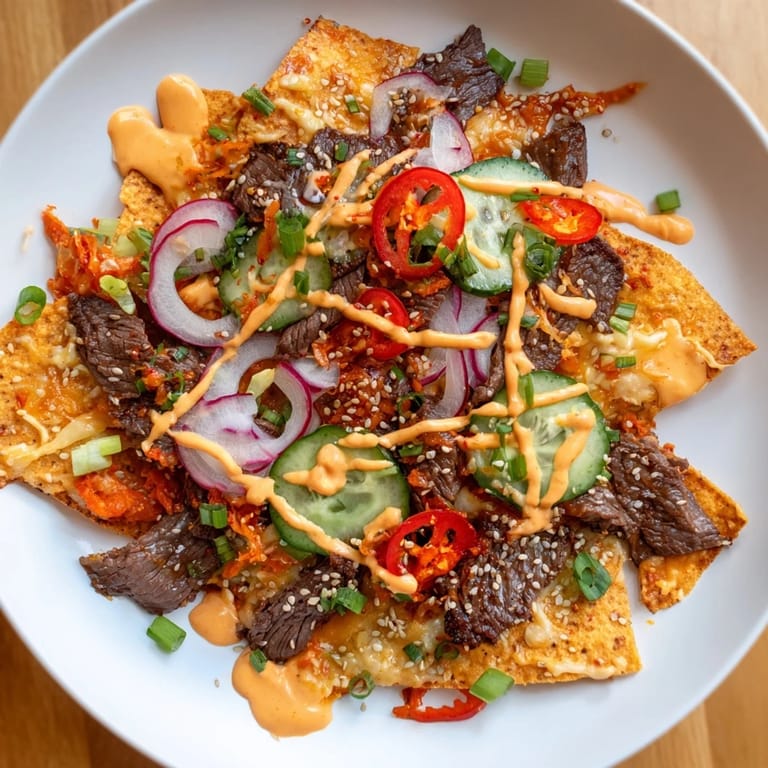
Save My first encounter with Korean BBQ nachos happened at a friend's dinner party where someone showed up with a tray that looked like pure chaos—crispy chips piled high with gochujang-marinated beef, melted cheese, and vegetables scattered everywhere. Everyone dove in at once, and I realized that night that Korean flavors didn't need to follow traditional plating rules to be absolutely addictive. Now, whenever I want to feel like I'm throwing an effortless gathering, these nachos are my secret weapon.
I'll never forget the moment I first tested this at a casual weeknight dinner with my partner—they took one bite and immediately asked if we could make it again the next day. That's when I knew I'd stumbled onto something special, something that bridges that gap between simple comfort food and genuinely exciting flavors.
Ingredients
- Flank steak or sirloin, thinly sliced: The thin slices cook quickly and absorb the marinade beautifully—I learned to partially freeze the meat for about 30 minutes before slicing, which makes cutting so much cleaner.
- Gochujang (Korean chili paste): This is the soul of the dish, bringing fermented depth and gentle heat that pairs perfectly with melted cheese and fresh vegetables.
- Soy sauce: Adds umami and saltiness that anchors all the flavors together.
- Brown sugar: Balances the heat and salty notes, creating a marinade that's complex rather than one-dimensional.
- Sesame oil: A little goes a long way—it adds that toasted, nutty aroma that makes people ask what smells so good.
- Garlic and ginger: Fresh versions are essential here; they brighten the marinade and prevent it from feeling heavy.
- Rice vinegar: Cuts through richness and adds a subtle tang that keeps the dish from becoming cloying.
- Tortilla chips: Choose sturdy chips that hold their crunch under cheese and toppings—flimsy ones will disappear into mush.
- Mozzarella and Korean cheese blend: The combination creates layers of melt with different textures, though honestly any good melting cheese works.
- Red onion, carrot, cucumber, scallions: These vegetables add freshness and crunch that contrasts beautifully with the warm, rich elements.
- Sesame seeds: Toasted seeds add visual appeal and a subtle nutty crunch that ties everything to Korean cuisine.
- Kimchi: The fermented, spicy kick at the end brings everything into focus and adds authentic flavor.
- Fresh cilantro or shiso leaves: Choose cilantro for brightness or shiso if you want something more herbaceous and Japanese-leaning.
- Sriracha or gochujang mayo: This drizzle is optional but transforms the dish from good to craveable with just a thin streak across the top.
Tired of Takeout? 🥡
Get 10 meals you can make faster than delivery arrives. Seriously.
One email. No spam. Unsubscribe anytime.
Instructions
- Build your marinade and let the beef soak:
- Whisk together gochujang, soy sauce, brown sugar, sesame oil, garlic, ginger, rice vinegar, and black pepper until everything is dissolved and glossy. Add your sliced beef and really massage it so every piece gets coated—you're not just coating, you're beginning to break down the proteins and infuse flavor. Let it sit for at least 20 minutes, though longer is better if you have time.
- Get your oven ready and start searing:
- Heat your oven to 200°C (400°F) and get a large skillet screaming hot over medium-high heat. Working in batches so you don't crowd the pan, sear the marinated beef for about 2 to 3 minutes until you hear that satisfying sizzle and the edges caramelize. You're not cooking it all the way through—just building color and flavor. Transfer each batch to a plate.
- Layer and melt:
- Line a baking tray with parchment for easy cleanup. Spread your tortilla chips in an even layer, then sprinkle half the cheese over them—this creates an adhesive layer that helps everything stay together. Scatter the cooked beef over that, then top with the remaining cheese. Slide it into the oven for 6 to 8 minutes until you see it bubbling and turning golden at the edges.
- Finish with vegetables and soul:
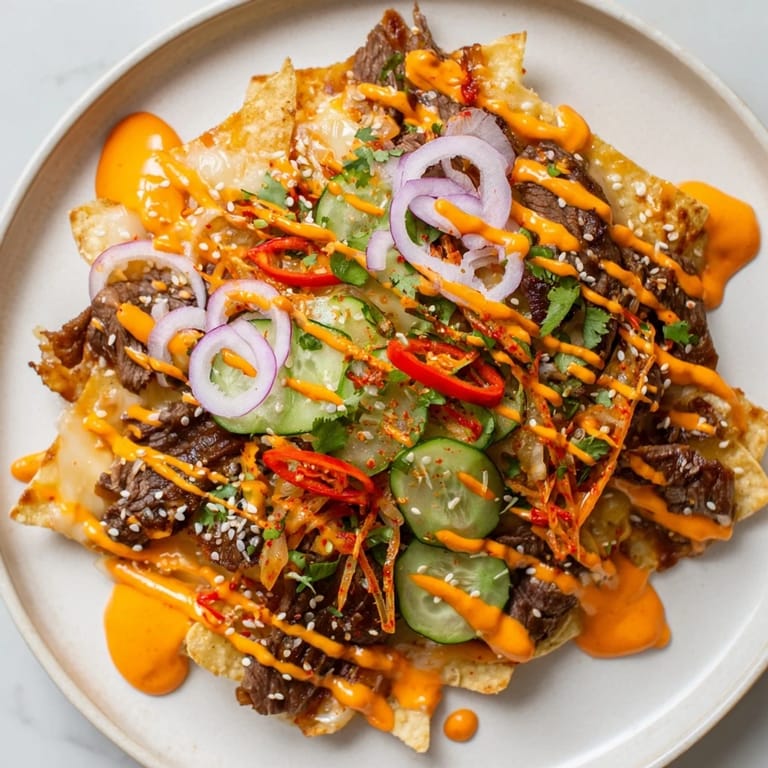
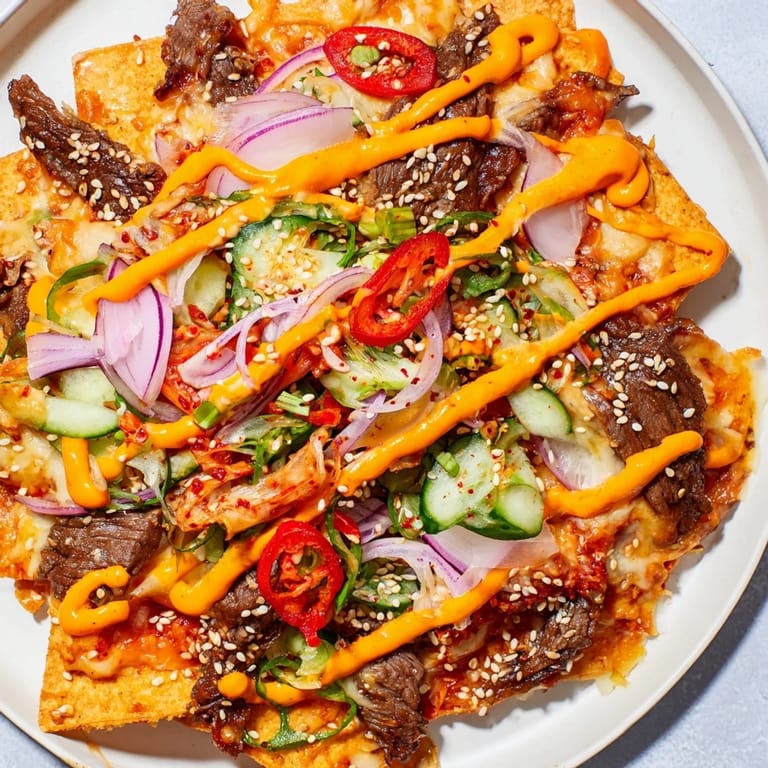
- Pull the tray from the oven while the cheese is still actively melting—this is the sweet spot. Quickly scatter red onion, carrot, cucumber, scallions, chili, and sesame seeds all over while everything is still warm. The heat will slightly soften the vegetables while keeping them fresh. Finish with a generous handful of chopped kimchi and herbs, then drizzle with sriracha mayo if you want that final flavor punch.
 Save
Save There's something magical about nachos because they're inherently communal—everyone reaches in at their own pace, gets exactly what they want, and it becomes less about perfect portions and more about the shared experience. These Korean BBQ nachos transformed my understanding of what dinner with friends could be: loud, messy, and utterly satisfying.
The Marinade is Everything
I used to think gochujang was just spicy, but once I started using it in marinades, I understood it's actually a flavor amplifier with depth and complexity. The fermented notes create something almost umami-forward when combined with soy sauce and sesame oil, which is why the beef tastes so restaurant-quality. Give yourself permission to taste the marinade before adding beef—it should be bold enough that you think it might be too strong, but then the meat tones it down perfectly.
Why This Works as a Fusion Dish
Korean BBQ and nachos seem like they shouldn't work together, but they do because both are fundamentally about bold, layered flavors and textural contrast. The spicy, umami-forward beef plays beautifully against melted cheese, and the fresh vegetables add brightness that keeps everything from becoming heavy. This dish respects both cuisines while creating something entirely its own, which is the heart of fusion cooking done right.
Making It Your Own
The beauty of nachos is their flexibility—I've made these with grilled chicken when beef wasn't in the budget, with marinated mushrooms for vegetarian friends, and even added avocado slices for richness. The foundation of gochujang-marinated protein and melted cheese stays constant while everything else is negotiable based on what you have and what you're craving.
- Try kimchi-marinated tofu if you want a vegetarian version that's just as flavorful as the beef.
- A squeeze of fresh lime juice right before serving brightens everything and cuts through the richness.
- Serve these as soon as they come out of the oven, because nachos wait for no one—the magic is in that moment when everything is warm and the cheese is still actively melting.
 Save
Save These Korean BBQ nachos have become my answer to the question of what to make when I want to feel like I've done something special without actually spending the whole day in the kitchen. Every bite is a reminder that the best meals happen when you're willing to mix traditions and trust your instincts.
Recipe FAQs
- → What is gochujang and how does it affect flavor?
Gochujang is a Korean fermented chili paste that provides a spicy, sweet, and savory depth to the beef, enhancing the overall umami of the dish.
- → Can I substitute beef with other proteins?
Yes, grilled chicken, tofu, or marinated mushrooms work well as alternatives, each bringing their unique texture while soaking up the marinade flavors.
- → What cheeses are best for this dish?
A mix of mozzarella and Korean-style cheeses like mozzarella-cheddar blends melts nicely and adds a creamy, mild tang that balances the spice.
- → How can I make this dish vegetarian?
Replace the beef with marinated mushrooms or jackfruit and use vegetarian tortilla chips to maintain the full flavor and texture profile.
- → What sides or drinks pair well with this platter?
A crisp lager or chilled soju complements the bold, spicy elements, while fresh lime wedges add a zesty finish.