 Save
Save My kitchen smelled like roasted broccoli the afternoon I first tried making pizza without the traditional dough, and honestly, I was skeptical. A friend had mentioned she'd mixed cooked broccoli with shredded chicken to create a crust, and it sounded like one of those health-food experiments that sounds good in theory but tastes like cardboard. I decided to test it myself, partly out of curiosity and partly because I was tired of feeling sluggish after heavy, carb-loaded meals. Twenty minutes into baking that first crust, when golden-brown edges started forming and the kitchen filled with this savory, almost nutty aroma, I realized I'd been wrong about dismissing it.
I made this for a dinner party last spring when my neighbor mentioned she was avoiding bread, and I wanted to prove that "healthy" pizza could still be something people actually wanted to eat. Watching everyone take their first slice with that cautious expression, then their eyes light up when they realized how good it was—that moment made me feel like I'd discovered something worth sharing. One guest asked for the recipe before she'd even finished eating, and now she makes it every other week.
Ingredients
- Cooked broccoli florets: Two cups, finely chopped or pulsed until they're almost rice-like; raw broccoli will release too much moisture and your crust becomes soggy, so cooking it first is the non-negotiable step.
- Cooked chicken breast: One and a half cups, shredded fine enough that it binds with everything else; rotisserie chicken works beautifully if you're short on time.
- Large egg: This is your binder, the thing that holds the whole composition together when it hits the heat.
- Shredded mozzarella cheese: Half a cup for the crust, one full cup for topping; use the good stuff if you can, the kind that actually melts.
- Grated Parmesan cheese: A quarter cup adds that savory, umami depth that makes people wonder what your secret ingredient is.
- Dried oregano and garlic powder: Half a teaspoon each brings those classic pizza flavors without needing tomato sauce alone to carry the taste.
- Salt and black pepper: A quarter teaspoon each; taste as you go because everything else is fairly flavorful.
- Sugar-free tomato sauce: Half a cup spread thin keeps the crust from getting waterlogged while still giving you that pizza essence.
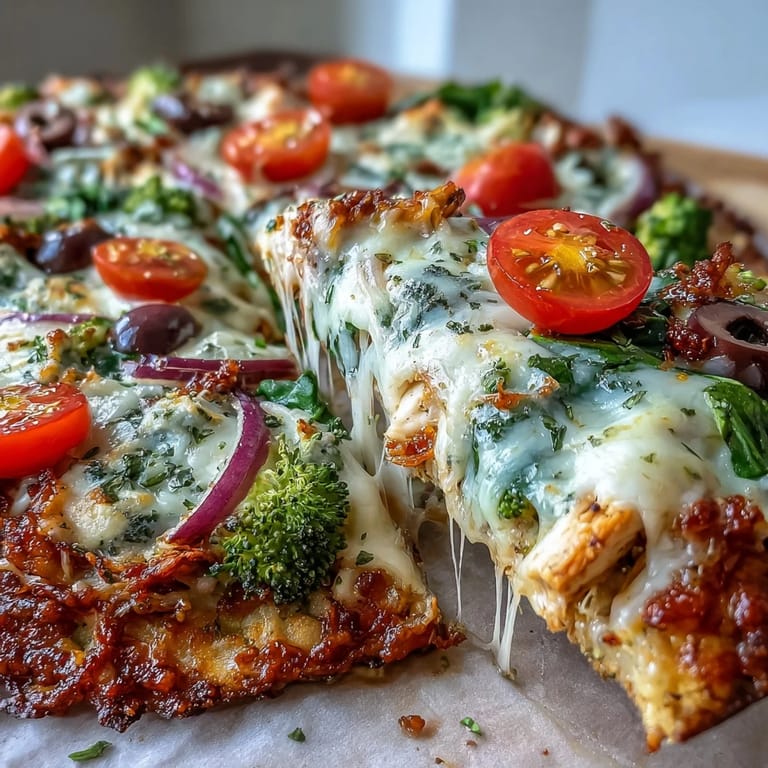
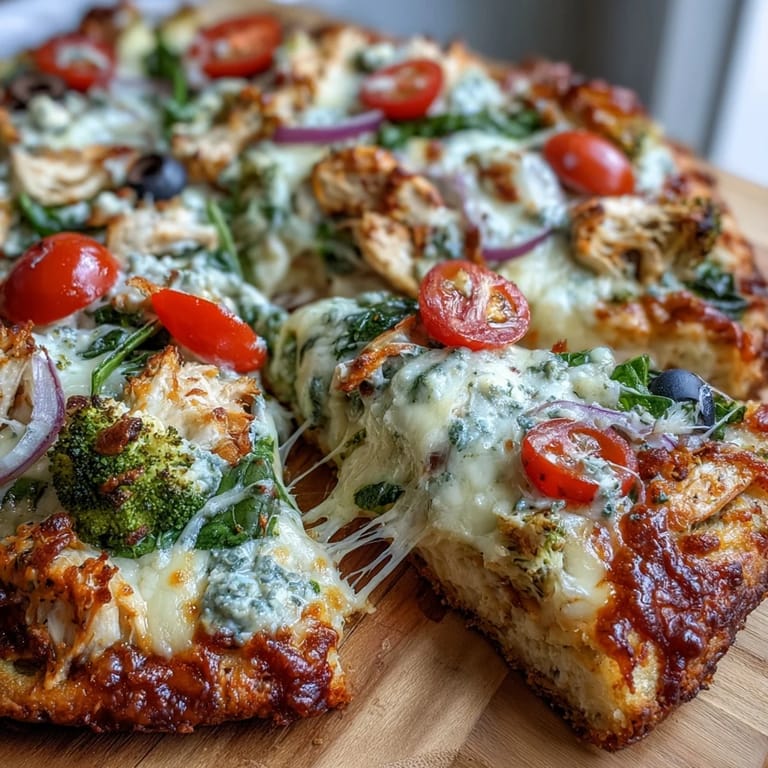
- Fresh vegetables for topping: Red onion, bell pepper, cherry tomatoes, olives, and spinach bring color, crunch, and nutrients; they're also forgiving about exact quantities.
- Dried Italian herbs: One teaspoon scattered on top adds aroma and makes it look intentional rather than thrown together.
Tired of Takeout? 🥡
Get 10 meals you can make faster than delivery arrives. Seriously.
One email. No spam. Unsubscribe anytime.
Instructions
- Preheat and prepare your workspace:
- Set your oven to 425°F and line a baking sheet with parchment paper; this prevents sticking and lets steam escape so your crust doesn't stay damp underneath.
- Mix the crust base:
- In a large bowl, combine the chopped broccoli, shredded chicken, egg, mozzarella, Parmesan, oregano, garlic powder, salt, and pepper until everything is bound together into a sticky, uniform mixture. It should feel cohesive enough to hold its shape but still slightly wet.
- Shape and pre-bake the crust:
- Transfer the mixture to your prepared sheet and shape it into a 12-inch round or oval about half an inch thick; press it down firmly with the back of a spatula so it stays compact. Bake for 20 minutes until the edges are golden and the surface feels set and firm to the touch.
- Add the sauce:
- Pull the crust from the oven and spread the tomato sauce evenly across it, leaving a tiny border if you want a crusty edge. Work quickly so the hot crust doesn't cool too much.
- Layer your toppings:
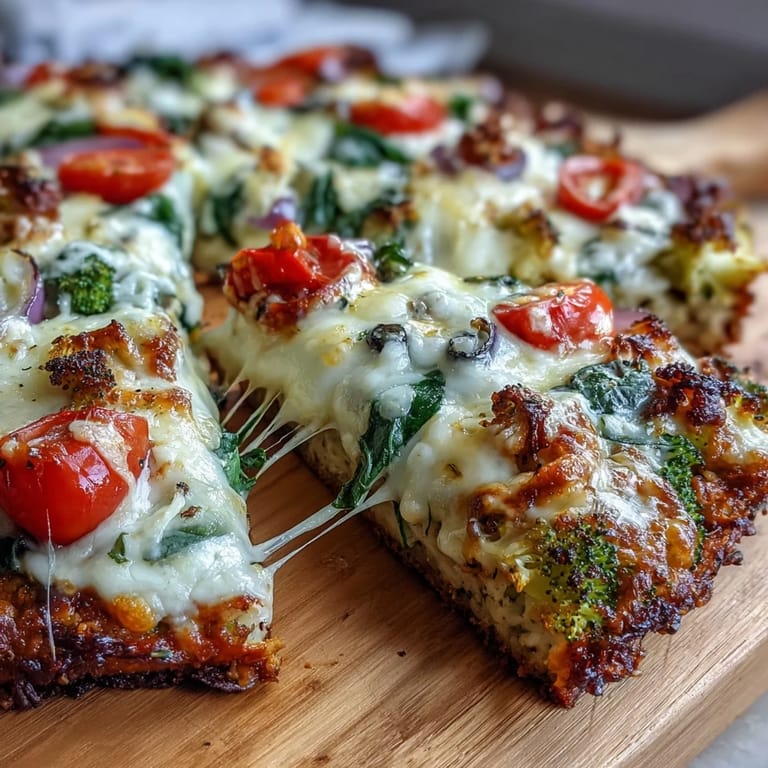
- Sprinkle the mozzarella cheese first, then arrange the onion, bell pepper, tomatoes, olives, and spinach in whatever pattern makes you happy. The cheese acts as a base that helps everything stay in place.
- Season and finish baking:
- Scatter the dried Italian herbs over everything and return it to the oven for 8 to 10 minutes until the cheese is bubbling and the vegetables are just starting to soften. Watch it the second time around because oven temperatures vary and you don't want the cheese to brown too dark.
- Rest and serve:
- Let it cool for a few minutes so the cheese sets slightly and you won't burn your mouth, then slice it like you would regular pizza. The crust will hold together better if you give it that short rest.
 Save
Save There's something quietly powerful about changing what people expect from familiar foods. My mom, who has always been a traditionalist about pizza, tried a slice and admitted it was better than she expected—and that's become our new language when we cook together, remembering that afternoon when we both learned that healthy doesn't mean bland.
Customizing Your Pizza
The beauty of this crust is that it's sturdy enough to handle whatever toppings you love, so there's real freedom here. I've added mushrooms, artichoke hearts, grilled zucchini, and even caramelized onions when I had time, and the crust never collapsed or became weird. You can lean heavily into vegetables if that's your preference, or keep toppings minimal if you want the broccoli-chicken base to shine. One evening I made a version with sun-dried tomatoes and fresh basil that tasted almost Italian-restaurant fancy.
Storage and Reheating
Leftovers stay good in the fridge for up to two days, and reheating matters if you want them to taste right. The microwave will make the crust rubbery, but putting a slice back in a 350°F oven for about five minutes restores that crispy texture and makes it taste almost like it's freshly made. I've also found that storing it in an airtight container keeps it from drying out, which happens if you just leave it uncovered on a plate.
Making It Work for Different Diets
This recipe is naturally gluten-free as written, though you should verify that your packaged ingredients don't have any hidden gluten if that matters to you. For a dairy-free version, vegan mozzarella and Parmesan alternatives work reasonably well; they won't melt exactly like the real thing, but they'll do the job and you'll still have something delicious. If you're cooking for vegetarians, swap the chicken for finely chopped mushrooms or crumbled tofu mixed with a bit of nutritional yeast for that savory flavor.
- Always taste your crust mixture before baking to make sure the seasoning feels right to your palate.
- Cut your vegetables uniformly so they cook at the same rate and your pizza bakes evenly.
- Fresh basil sprinkled on right after it comes out of the oven adds brightness that dried herbs just can't match.
 Save
Save This pizza has become my answer to the question, "How do I eat something that feels like a treat but doesn't make me feel terrible afterward?" Make it once and you'll understand why it's stuck around in my weekly rotation.
Recipe FAQs
- → How do I make the crust hold together properly?
The key is finely chopping or pulsing the cooked broccoli and thoroughly shredding the chicken. Mix all crust ingredients until a sticky, uniform dough forms. Press firmly onto the baking sheet and bake for the full 20 minutes to ensure the crust becomes firm and golden before adding toppings.
- → Can I prepare this ahead of time?
Yes, you can pre-bake the crust and store it in the refrigerator for up to 24 hours. When ready to serve, add your toppings and bake for the final 8-10 minutes. Leftovers keep well in the fridge for 2 days and reheat best in the oven to maintain texture.
- → What other vegetables work as toppings?
Mushrooms, artichoke hearts, grilled zucchini, or fresh arugula all make excellent additions. The base crust pairs well with most traditional pizza vegetables while keeping the dish low-carb and nutrient-dense.
- → Is this completely gluten-free?
Yes, this pizza is naturally gluten-free when made with certified gluten-free ingredients. Always verify that your tomato sauce, spices, and cheeses are labeled gluten-free to avoid cross-contamination.
- → Can I make this dairy-free?
Substitute the mozzarella and Parmesan with vegan cheese alternatives. You may need to adjust baking time slightly as dairy-free cheeses often melt differently. The crust still binds well without traditional dairy cheese.