 Save
Save I discovered sushi bake on a lazy Sunday afternoon when my roommate suggested we make sushi but neither of us wanted to roll anything. We raided the fridge, grabbed what we had, and started layering it into a baking dish like we were building edible architecture. Twenty minutes later, we pulled out something that tasted exactly like sushi but required zero rolling skills and honestly, way less frustration. It became our shortcut to impressing people without the fussy technique.
The first time I made this for my book club, I was nervous they'd think it was lazy or not "real" sushi, but watching them come back for thirds told me everything. One person described it as comfort food that tastes like celebration, and honestly, that stuck with me. Now whenever someone asks for a recipe that's both impressive and forgiving, this is the one I suggest.
Ingredients
- Sushi rice: The foundation everything rests on, and rinsing it properly makes a real difference in texture; don't skip the water-until-clear step.
- Rice vinegar, sugar, and salt: This seasoning mixture is what transforms plain rice into sushi rice, and the proportions matter more than you'd think.
- Salmon fillet: Fresh and skinless works best here; baking it gently keeps it moist instead of tough.
- Soy sauce and sesame oil: These bring umami depth to the salmon and should be brushed on before baking for flavor that soaks in.
- Cream cheese and mayonnaise: Kewpie mayo really does taste different and creamier if you can find it, which is worth seeking out.
- Sriracha: Optional but it adds a gentle heat that balances the richness without overpowering.
- Avocado: Add this after baking so it stays bright and creamy rather than darkening from heat.
- Nori: Cut into small squares so every bite gets that toasted seaweed flavor distributed throughout.
- Sesame seeds and spring onions: These finish the dish with textural contrast and fresh brightness.
Tired of Takeout? 🥡
Get 10 meals you can make faster than delivery arrives. Seriously.
One email. No spam. Unsubscribe anytime.
Instructions
- Prepare the rice foundation:
- Rinse your sushi rice under cold running water, stirring gently with your fingers, until the water runs clear instead of milky. This removes excess starch and prevents the rice from becoming gluey. Combine with water in a saucepan, bring to a boil, then reduce heat to low, cover, and let it steam for 15 minutes without peeking.
- Season while warm:
- In a small bowl, whisk together rice vinegar, sugar, and salt until the sugar dissolves completely. Pour this over the hot rice and fold it in gently with a fork, fluffing as you go so the vinegar distributes evenly. This is when your kitchen will smell like a sushi restaurant.
- Build your base:
- Spread the seasoned rice evenly into a lightly greased 9x13-inch baking dish, pressing it down just enough to create an even layer. This gives you a smooth, stable foundation for everything else.
- Bake the salmon:
- While your oven preheats to 400°F, place the salmon fillet on a parchment-lined tray, brush with soy sauce and sesame oil, then sprinkle with black pepper. Bake for 12 to 15 minutes until it flakes easily with a fork and the edges are just cooked through; slightly underdone is better than dry.
- Make the creamy layer:
- Once the salmon cools slightly, flake it with a fork into small, bite-sized pieces, removing any stray bones you might find. In a bowl, combine softened cream cheese, mayonnaise, sriracha if using, and lemon juice, stirring until smooth, then fold in the salmon until everything is evenly mixed.
- Assemble and bake:
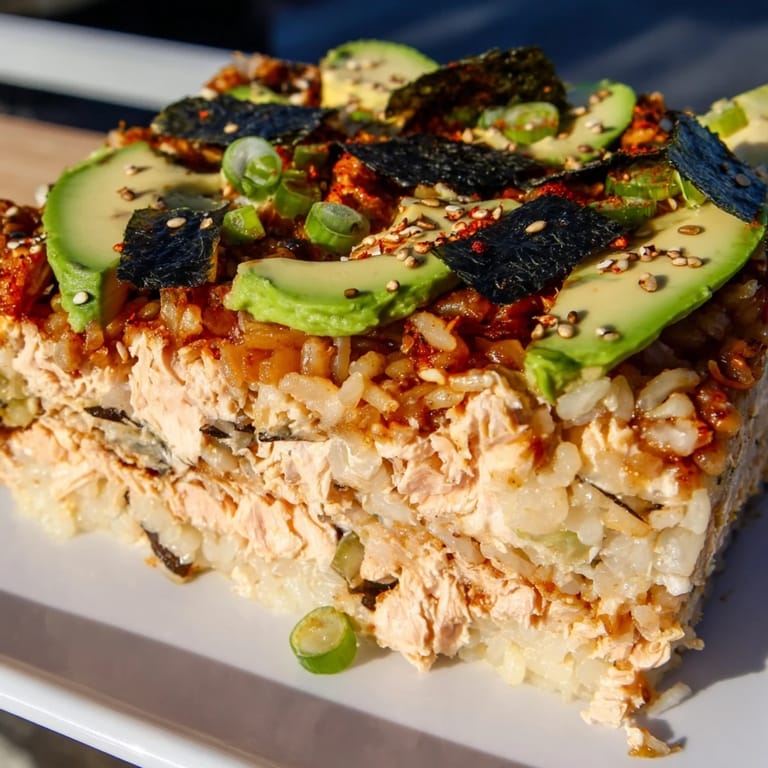
- Spread the salmon mixture evenly over your rice layer, creating a smooth, even surface. Bake the whole casserole at 400°F for 10 minutes until it's warmed through and the top is just beginning to turn golden.
- Top and serve:
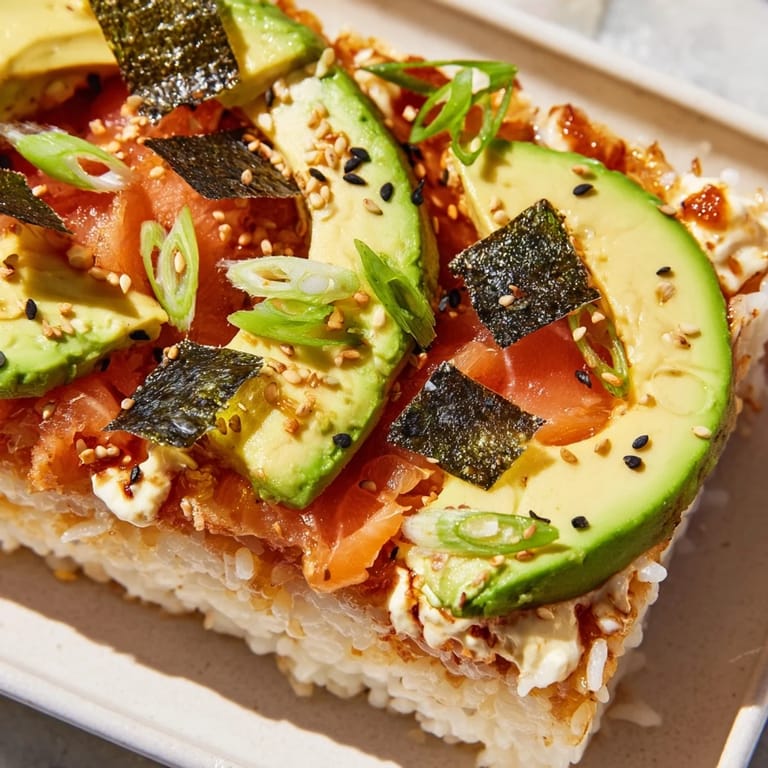
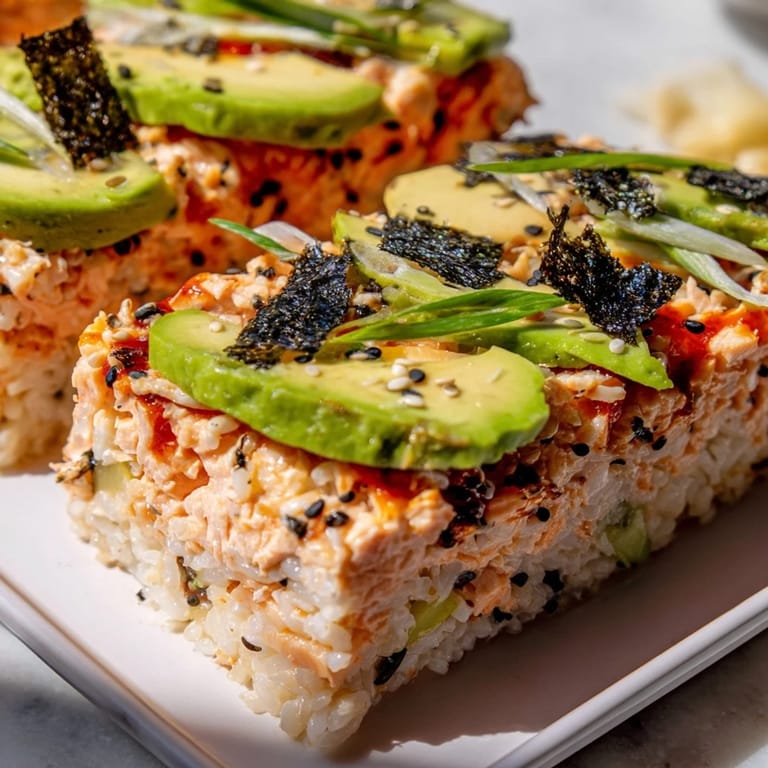
- Remove from the oven and immediately top with sliced avocado arranged in whatever pattern appeals to you, then scatter nori squares, toasted sesame seeds, and sliced spring onions over everything. The warmth of the casserole will soften the avocado slightly while keeping it from browning.
 Save
Save There's something magical about serving this straight from the oven, watching people's faces light up when they realize how simple but satisfying every bite is. It's sushi for people who want restaurant quality without the restaurant anxiety.
Why This Works as a Crowd-Pleaser
Sushi bake hits that sweet spot between casual and impressive, which makes it perfect for feeding a group without spending your entire day in the kitchen. The warm, creamy center contrasts beautifully with the cool, fresh toppings, and everyone can eat it with just a fork or spoon. You're essentially giving people sushi comfort food, which is exactly what comfort food should do.
Smart Substitutions and Variations
If salmon isn't your thing or you're feeling adventurous, cooked crab meat brings a slightly sweeter, more delicate flavor, while canned tuna works when you're in a pinch and keeps costs down. Shrimp, especially if you cook it yourself with a brush of that same soy-sesame mixture, brings a firmer texture and mild sweetness. Each protein works beautifully with the creamy mayo-based layer, so there's real freedom here to follow what's in your budget or what you're craving.
Pairing and Serving Suggestions
Serve this warm or at room temperature, with small bowls of soy sauce, pickled ginger, and wasabi arranged nearby so everyone can customize their dipping ratio. A crisp white wine like Sauvignon Blanc or chilled sake cuts through the richness perfectly and feels celebratory without being pretentious. Save any leftovers and eat them cold the next day, which is honestly delicious in a completely different way.
- Pair with a light cucumber salad if you want something fresh alongside.
- Have extra nori sheets available for people who want more seaweed flavor.
- A squeeze of fresh lemon juice right before eating brightens everything.
 Save
Save This recipe proves that good food doesn't have to be complicated, just thoughtfully assembled and served with care. Once you make it once, it becomes your go-to for impressing people without breaking a sweat.
Recipe FAQs
- → Can I use other fish instead of salmon?
Yes, you can substitute cooked crab meat, canned tuna, or cooked shrimp for salmon to vary the flavor while keeping a pescatarian option.
- → How do I cook the sushi rice properly?
Rinse the rice under cold water until clear, then simmer with water for 15 minutes. Let it rest covered off heat for 10 minutes before seasoning with vinegar, sugar, and salt.
- → What is the best way to get a creamy salmon layer?
Mix softened cream cheese, mayonnaise, sriracha, and lemon juice, then fold in flaked baked salmon for a smooth, flavorful topping.
- → Can I add extra crunch to the dish?
Yes, sprinkling panko breadcrumbs on top before baking adds a delightful crispy texture to the finished dish.
- → What drinks pair well with this layered dish?
Crisp, dry white wines like Sauvignon Blanc or chilled sake complement the rich, savory layers beautifully.
- → Are there common allergens in this dish?
Yes, it contains fish, dairy, eggs from mayonnaise, soy, and nori which may trace shellfish. Always check ingredient labels if concerned.