 Save
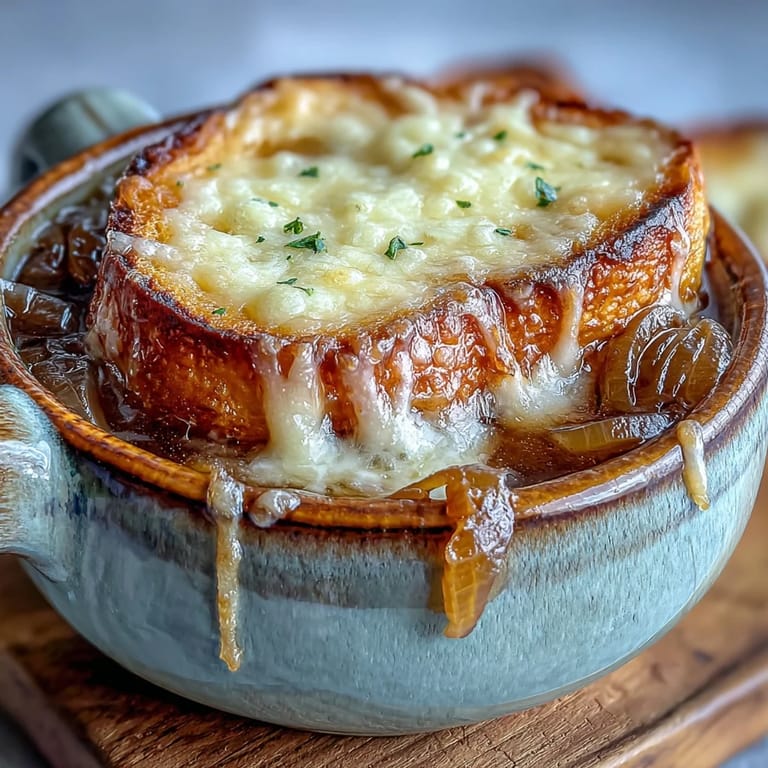
Save The first time I made French onion soup, our kitchen windows completely fogged up from the caramelizing onions. I stood there, wooden spoon in hand for nearly an hour, watching the transformation from sharp white crescents to deep mahogany ribbons that practically melted away. The aroma changed too - from eye-watering to something so rich and sweet that my neighbor actually knocked on my door to ask what that heavenly smell was.
Last winter during that awful week-long power outage, I managed to make this soup on our gas stove by candlelight. We huddled around the table with friends from down the street, dipping crusty bread into our steaming bowls while sharing stories. Something about the golden cheese pulling away in long strings and the warmth of the soup made us forget about the darkness outside.
Ingredients
- Yellow onions: I learned from a French chef that yellow onions are non-negotiable here - their higher sugar content caramelizes beautifully while still maintaining structure.
- Butter and olive oil combo: The butter gives richness while the olive oil prevents burning during the long caramelization process.
- White wine: Use something you would drink, as the acidity cuts through the richness and adds complexity.
- Gruyère cheese: Its nutty flavor intensifies as it browns and creates that signature pull when you take a spoonful.
- Fresh thyme: Dried just isnt the same here - fresh thyme releases its oils gradually into the broth, infusing it with subtle earthiness.
Tired of Takeout? 🥡
Get 10 meals you can make faster than delivery arrives. Seriously.
One email. No spam. Unsubscribe anytime.
Instructions
- Patience with the onions:
- Melt butter and oil in a heavy pot, then add your sliced onions. This is where magic happens slowly - stir occasionally for about 35-40 minutes until they transform into a deep caramel color.
- Building the foundation:
- Once onions are deeply caramelized, add minced garlic until fragrant, then sprinkle flour and cook for 2 minutes. This creates a light roux that adds body to our soup.
- Liquid gold:
- Pour in the wine to deglaze, scraping up all those flavorful bits from the bottom. Add stock, thyme, and bay leaf, then simmer uncovered for 20-25 minutes until flavors marry.
- Creating the crown:
- Toast oil-brushed baguette slices until golden, then ladle soup into oven-safe bowls. Top each with toast and a generous handful of grated Gruyère.
- The final transformation:
- Broil until cheese bubbles and develops patches of golden-brown. Watch closely - those last 30 seconds make all the difference between perfect and scorched.
 Save
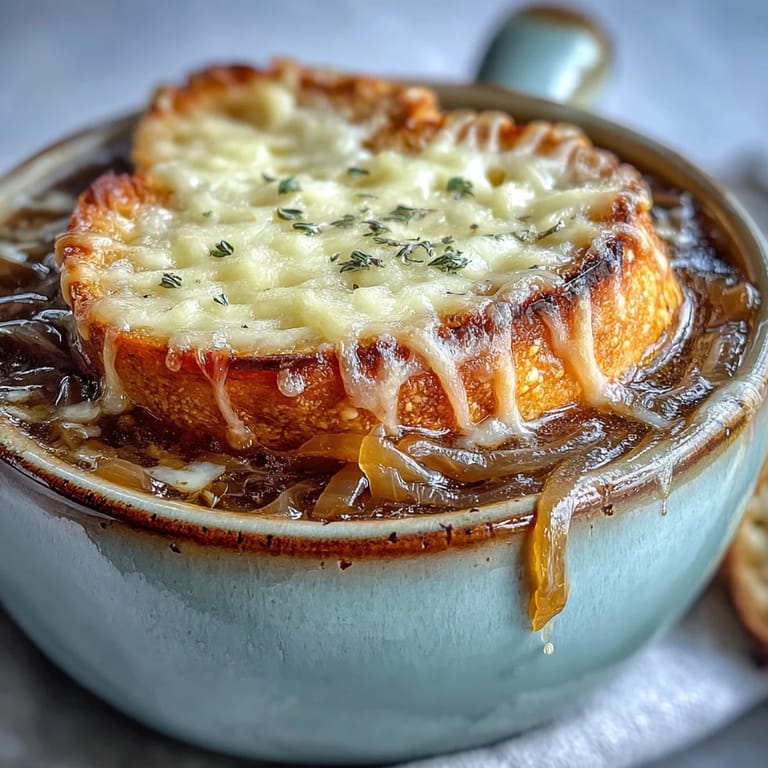
Save My daughter, who famously rejects anything with visible onions, stood watching me make this soup one Sunday afternoon. The smell eventually lured her to try just a tiny spoonful, which led to another, and another. Now its our special tradition whenever she comes home from college - bowls of bubbling soup with extra cheese, mugs of hot apple cider, and catching up on everything that cant be shared in text messages.
The Secret to Perfectly Caramelized Onions
I spent years trying different methods before landing on what works best: start with room temperature onions sliced about 1/4-inch thick, a heavy-bottomed pot that distributes heat evenly, and a wooden spoon that can scrape the bottom properly. The addition of a tiny pinch of sugar halfway through isnt cheating - its simply encouraging the natural sugars in the onions to develop more quickly. And contrary to what some recipes suggest, I find stirring every 5-7 minutes rather than constantly gives the best color.
Wine Pairing Insights
After serving this soup at countless dinner parties, Ive found that a crisp Alsatian white wine like Pinot Gris creates a beautiful contrast with the richness of the soup. The acidity cuts through the cheese while the subtle fruit notes complement the caramelized onions. If red is more your style, a light-bodied Beaujolais works surprisingly well - its bright character doesnt overpower the subtle nuances of the broth.
Make-Ahead and Storage Tips
One snowy weekend, I discovered that this soup actually improves with time when I made a double batch and refrigerated half for later. The flavors had melded and deepened in a way that made the second serving even more delicious than the first. The key is storing the components separately - keep the soup base refrigerated for up to 3 days, then assemble with fresh bread and cheese just before serving.
- If freezing the soup base, leave out the wine and add it fresh when reheating for brighter flavor.
- Pre-slice and freeze the bread separately, then toast directly from frozen when ready to serve.
- Always grate cheese fresh rather than using pre-shredded for the best melt and flavor.
 Save
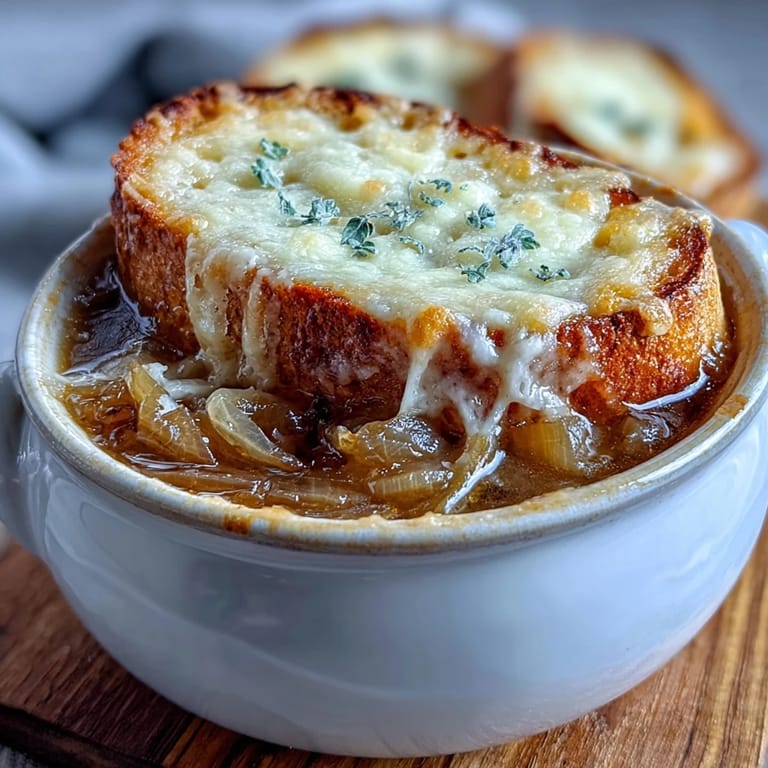
Save French onion soup isnt just a meal, its a moment - one that demands you slow down and savor. When those strings of melted Gruyère stretch from bowl to spoon and steam rises to warm your face, youre experiencing something that has comforted people for centuries.
Recipe FAQs
- → How long does it take to caramelize onions properly?
Proper caramelization takes 35-40 minutes over medium heat. Stir frequently to prevent burning. The onions should turn deep amber and develop natural sweetness—this slow process is essential for authentic flavor depth.
- → Can I make French onion soup in advance?
Absolutely. The soup base actually improves after 1-2 days in the refrigerator as flavors meld. Store separately from the bread and cheese, then reheat gently and add toppings just before serving for the best texture.
- → What cheese works best for French onion soup?
Classic Gruyère is traditional for its nutty flavor and excellent melting properties. Emmental or Comté make wonderful French alternatives. For optimal results, grate your own cheese rather than buying pre-shredded.
- → What type of onions are ideal?
Yellow onions provide the best balance of sweetness and flavor. Red onions can be too harsh, while white onions may lack depth. Large yellow onions caramelize beautifully and develop that characteristic rich, amber color.
- → Can I freeze French onion soup?
The soup base freezes exceptionally well for up to 3 months. However, freeze it without the bread and cheese topping. Thaw overnight in the refrigerator, reheat on the stovetop, and add fresh toppings when serving.
- → Why add flour to the soup?
The flour helps create a slightly thicker, more velvety consistency. Cooking it for 2 minutes before adding liquid removes any raw flour taste and creates a smooth, cohesive broth that coats the spoon beautifully.