 Save
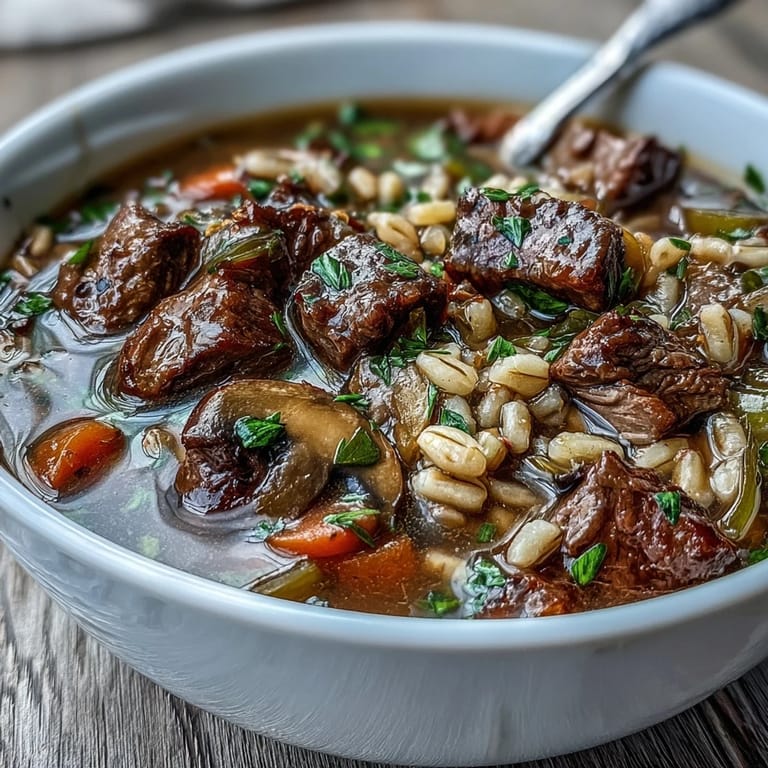
Save The first time I made beef and barley soup, I was seeking comfort during a particularly brutal winter storm. Snow piled against the windows while the aroma of searing beef and sautéing vegetables gradually filled my kitchen with warmth. I remember how the pearl barley transformed before my eyes, plumping up and creating that distinctive chew that makes this soup so satisfying. My initial skepticism about adding tomatoes quickly vanished when I tasted the remarkable depth they brought to the broth.
Last autumn, when my neighbor was recovering from surgery, I brought over a batch of this soup. She called me the next day with such genuine appreciation in her voice that I nearly teared up. Her husband mentioned theyd been living on takeout for weeks, and something homemade had restored a bit of normalcy. Since then, Ive noticed how this humble soup creates connections far beyond its ingredients.
Ingredients
- Beef stew meat: Look for cuts with good marbling since that fat melts during cooking and creates unbelievable richness in your broth.
- Pearl barley: Dont skip rinsing it as I once did and regretted the slightly cloudy result.
- Mushrooms: Brown mushrooms work beautifully here but white button mushrooms are perfectly fine if thats what you have on hand.
- Frozen peas: Adding these toward the end preserves their bright color and prevents them from turning mushy.
- Bay leaves: They might seem insignificant but they contribute a subtle background note that youd definitely miss if they werent there.
Tired of Takeout? 🥡
Get 10 meals you can make faster than delivery arrives. Seriously.
One email. No spam. Unsubscribe anytime.
Instructions
- Develop that foundation:
- Heat olive oil until it shimmers then add your beef cubes without overcrowding the pot. Let them develop that beautiful brown crust before turning, about 5 minutes total.
- Build the flavor base:
- In that same pot with all those gorgeous beef drippings, add your onions, carrots, celery, and mushrooms. The vegetables will release moisture that helps scrape up those browned bits from the bottom.
- Add the aromatics:
- When the vegetables have softened, add garlic and cook just until fragrant. You can smell when its ready, that moment when the sharpness mellows into something more inviting.
- Bring everything together:
- Return the beef to the pot along with potatoes, barley, tomatoes, broth, and herbs. This is where patience becomes an ingredient.
- Let it simmer:
- Reduce the heat to maintain a gentle bubble, not a rolling boil. The transformation happens slowly as the barley releases its starch and thickens the broth.
- Finish with freshness:
- Add your peas when everything else is nearly done. Their bright green color and sweet flavor lighten the otherwise earthy profile of the soup.
 Save
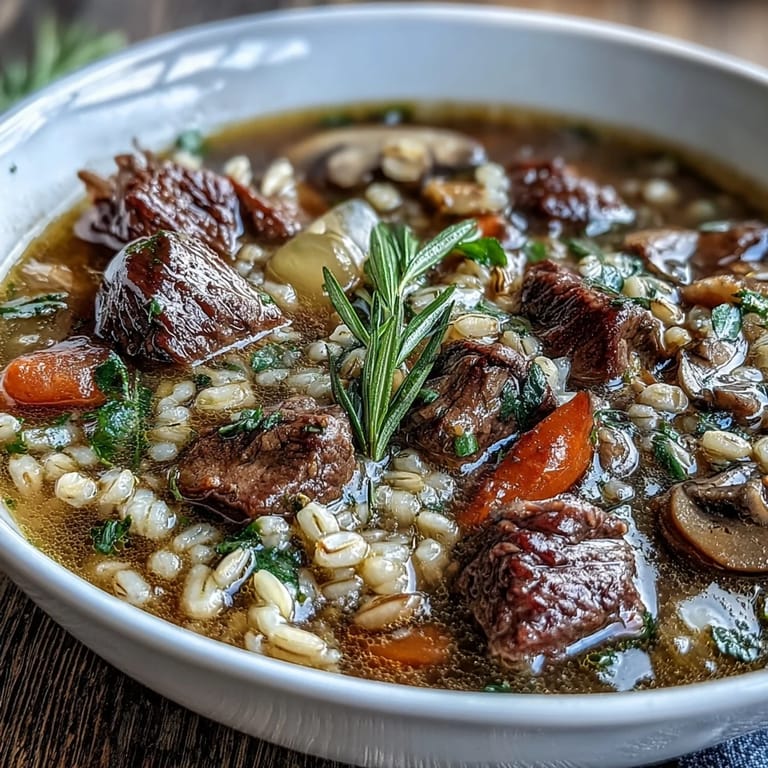
Save Once during a neighborhood potluck, I brought this soup in my largest pot, still warm from the stove. An elderly gentleman approached me afterward, eyes slightly misty, mentioning how it reminded him of what his mother made during difficult times. We ended up talking for nearly an hour about food memories while everyone else cleaned up around us. Sometimes a simple bowl of soup transcends nourishment and becomes connection.
Texture Perfection
Finding the ideal texture balance took me several attempts to master. Early versions were either too brothy or too thick like stew. The sweet spot arrives when the soup has body but still moves freely in your spoon. If youre serving this for company, consider making it a day ahead and letting those flavors deepen overnight, then gently reheating with a splash more broth to reach that perfect consistency.
Seasonal Adaptations
Through years of making this soup across seasons, Ive discovered it welcomes adaptation beautifully. Summer versions with fresh garden tomatoes and just-picked herbs take on a brighter profile. Fall renditions with added butternut squash cubes bring earthy sweetness. Winter variations might include a splash of red wine for additional depth, while spring inspires me to finish with fresh dill and tender greens.
Serving Suggestions
The ritual of serving this soup has evolved in my kitchen over time. I used to think a simple bowl was sufficient, but now I appreciate how thoughtful accompaniments elevate the experience.
- A board of crusty sourdough bread with salted butter makes the meal feel complete and provides the perfect vehicle for catching every drop.
- A small dish of finely grated parmesan cheese offers diners the chance to customize their bowl with a savory flourish.
- Consider setting out small ramekins of fresh herbs like parsley, dill, or chives for a vibrant garnish that brightens both appearance and flavor.
 Save
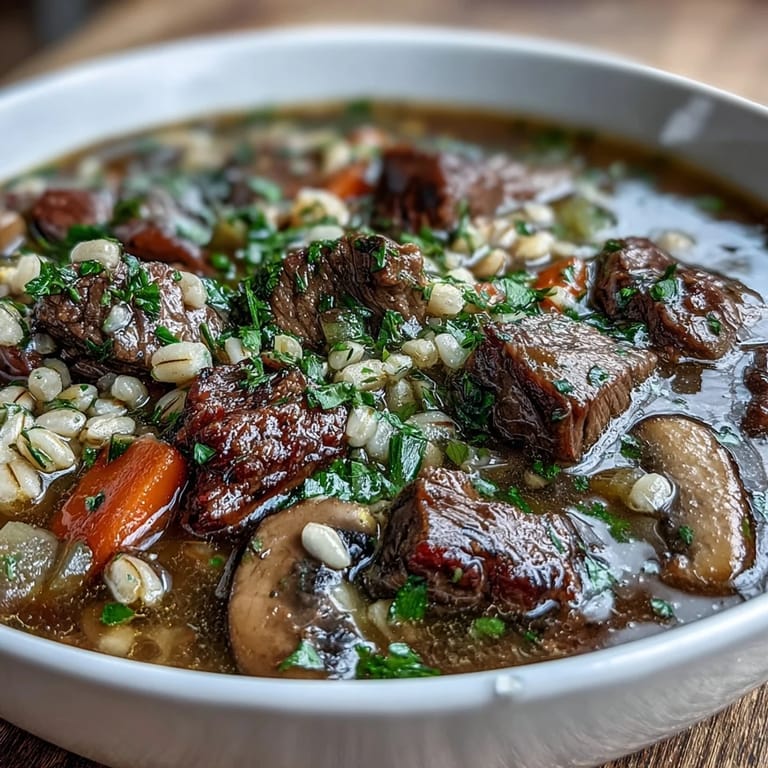
Save This soup has taught me that sometimes the most meaningful cooking isnt about complexity or novelty, but about creating something that wraps around you like a warm blanket. Each batch feels like both comfort and celebration.
Recipe FAQs
- → How long does beef and barley soup take to cook?
The total cooking time is approximately 1 hour and 40 minutes. This includes browning the beef, sautéing vegetables, and simmering until the barley and beef reach optimal tenderness.
- → Can I make this soup in a slow cooker?
Yes, brown the beef first then add all ingredients to your slow cooker. Cook on low for 7-8 hours or high for 4-5 hours, adding the peas during the last 30 minutes.
- → Does pearl barley need to be soaked before cooking?
No soaking required. Simply rinse the pearl barley before adding it to the soup. It will cook directly in the broth, absorbing flavors as it becomes tender.
- → What cut of beef works best?
Beef stew meat or chuck roast cut into cubes are ideal choices. These cuts become tender and flavorful during long simmering, creating that perfect melt-in-your-mouth texture.
- → How long will leftovers keep?
Properly stored in the refrigerator, this soup will keep for up to 4 days. The flavors often improve overnight as the barley continues to absorb the delicious broth.
- → Can I freeze beef and barley soup?
Absolutely. Cool completely before transferring to airtight containers or freezer bags. It will maintain quality for up to 3 months in the freezer.