 Save
Save I discovered this dish on a quiet Tuesday evening when I had linguine in the pantry and a craving for something spicy that felt nothing like my usual cooking routine. There was a half-can of coconut milk lingering in the back of my fridge, and a small jar of Thai green curry paste I'd bought weeks earlier on a whim. The combination seemed almost absurd—pasta with coconut and green curry—but something about the possibility made me want to try it. That first tangle of noodles coated in aromatic, creamy sauce changed how I thought about fusion cooking forever.
I made this for friends who were skeptical about curry and pasta existing in the same bowl. By the third forkful, someone asked for the recipe, and I realized I'd stumbled onto something that bridges cuisines in a way that just works. Now it's become my go-to dish when I want to impress without the stress, and it's taught me that cooking doesn't always need to follow tradition to feel right.
Ingredients
- Linguine or spaghetti (350 g): Use a good quality pasta that can hold onto the sauce; thinner noodles work best because they absorb the curry flavors more readily.
- Vegetable oil (2 tbsp): This is your base for blooming the curry paste and releasing all those aromatic oils.
- Thai green curry paste (3 tbsp): The heart of this dish—taste your paste first, as brands vary wildly in heat and intensity, and adjust accordingly.
- Coconut milk (400 ml): Full-fat is essential here; light coconut milk will give you a thin, wan sauce instead of the luxurious coating you want.
- Soy sauce (1 tbsp): This adds depth and umami that makes the sauce taste more complex than the sum of its parts.
- Brown sugar (1 tbsp): A small amount rounds out the heat and balances the acidity without making the dish sweet.
- Fresh ginger (1 tsp, grated): Freshly grated ginger wakes up the whole sauce; ground ginger won't give you the same vibrant edge.
- Lime juice (from 1 lime): Save this for the very end so it stays bright and doesn't cook off into the background.
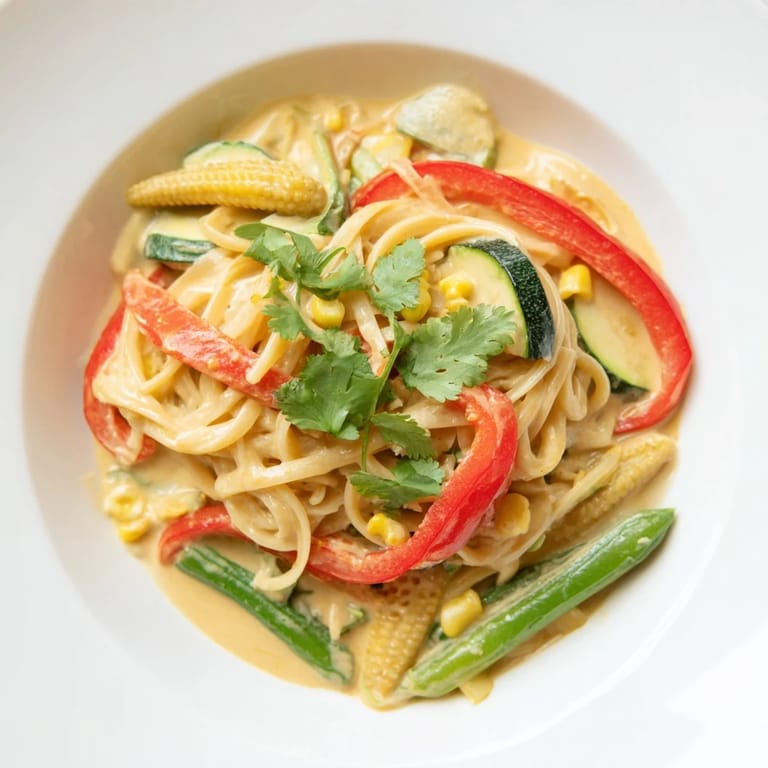
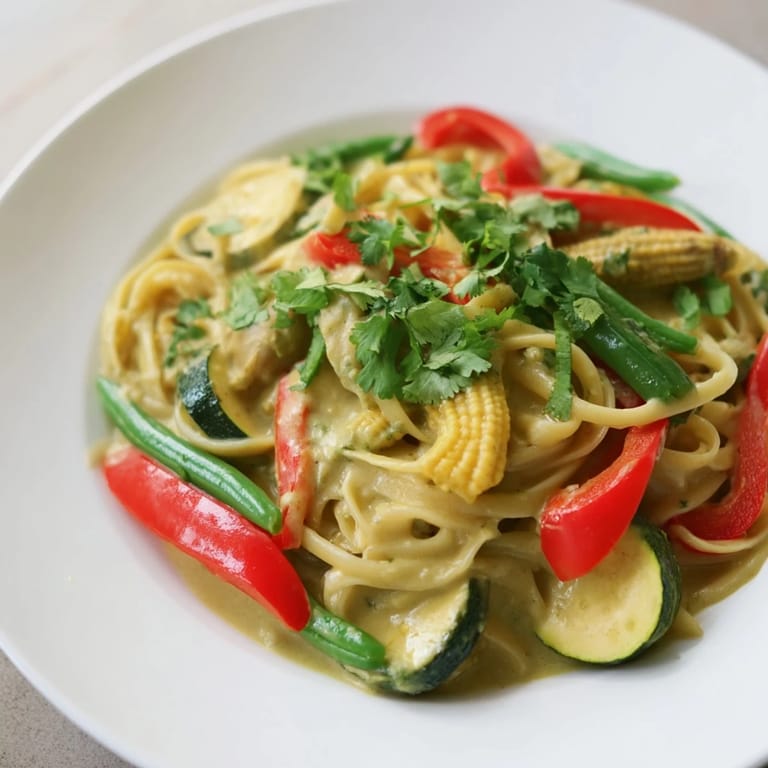
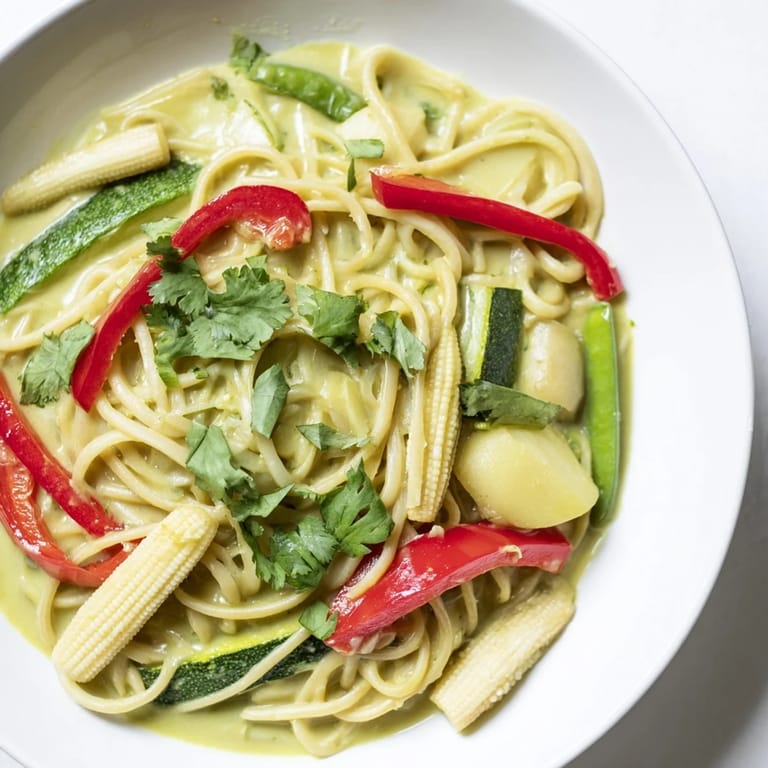
- Red bell pepper, zucchini, snap peas, baby corn: These vegetables should be prepped before you start cooking so they're ready to go into the pan at exactly the right moment.
- Spring onions and fresh cilantro: These are your final freshness boost, stirred in at the last second to keep their texture and bite.
Tired of Takeout? 🥡
Get 10 meals you can make faster than delivery arrives. Seriously.
One email. No spam. Unsubscribe anytime.
Instructions
- Get Your Water Boiling:
- Fill a large pot with water, add a generous pinch of salt, and bring it to a rolling boil. The salt seasons the pasta from the inside out and makes the whole dish taste better from the start. While you wait, prep all your vegetables so they're ready the moment you need them.
- Bloom the Curry Paste:
- Heat vegetable oil in a large skillet or wok over medium heat until it shimmers, then add the curry paste and ginger. Let them sizzle together for 1–2 minutes; you'll smell the shift as the paste releases its aromatics and stops smelling raw. This step is non-negotiable—it transforms the paste from harsh to round and complex.
- Build the Sauce:
- Pour in the coconut milk, soy sauce, and brown sugar, stirring until smooth. Simmer gently for 3–4 minutes, letting everything meld, and you'll notice the sauce deepening in color and aroma. The sugar should dissolve completely and the sauce should smell irresistible at this point.
- Cook the Pasta:
- While the sauce simmers, drop your pasta into the boiling water and cook it 1 minute under al dente—it will finish cooking when you toss it with the sauce. Drain it well but don't rinse it; the starch on the noodles helps the sauce cling better.
- Add the Vegetables:
- Slide the bell pepper, zucchini, snap peas, and baby corn into the curry sauce and let them cook for 5–6 minutes until they're tender-crisp. You want them to soften enough to taste cooked but still have a little resistance when you bite them; this contrast is what makes the dish interesting.
- Bring It Together:
- Add the cooked pasta and reserved pasta water to the skillet, tossing everything together gently but thoroughly. The pasta water loosens the sauce and lets it coat every strand; simmer for another 2–3 minutes so the noodles can absorb the curry flavor.
- Finish with Brightness:
- Turn off the heat and stir in the spring onions, lime juice, and cilantro. Taste and adjust seasoning—maybe more lime, maybe a pinch more salt or curry paste, depending on your preference. Serve immediately while everything is still steaming.
 Save
Save I made this for a friend who had been vegetarian for six months and was tired of the usual options. Watching them go back for seconds, then thirds, felt like validation that good food doesn't need to be complicated or follow rules about which cuisines belong together. That meal became a turning point in how I think about cooking—permission to trust my instincts even when they seem unconventional.
Why This Fusion Actually Works
Thai and Italian cuisines share more DNA than you'd think at first glance: both rely on fresh herbs, bright acids, aromatic oils, and a balance of heat and sweetness. Pasta is a blank canvas that absorbs sauce beautifully, and coconut curry is assertive enough to coat every strand without getting lost. The marriage of long noodles and layered Asian flavors creates something that feels natural, not forced, and that's the secret to why this dish works so well.
Customizing to Your Taste
The beauty of this recipe is how flexible it is without losing its identity. If you want more protein, add shrimp, chunks of chicken, or cubed tofu—they'll cook gently in the warm sauce and take on all the flavors. Vegetables can be swapped freely based on what's in your fridge or what you're craving; broccoli, carrots, and mushrooms all work beautifully. For heat level, start with less curry paste than the recipe calls for and taste as you go; you can always add more, but you can't take it back out.
Serving and Pairing
This dish is best served immediately while the vegetables still have some texture and the sauce is hot and silky. A squeeze of fresh lime at the table lets people adjust the brightness to their preference, and a small handful of cilantro or sliced red chili scattered on top adds final visual appeal and a fresh kick. It pairs well with crisp white wine like Riesling or Sauvignon Blanc, and if you're looking for something non-alcoholic, a cold Thai iced tea cuts through the richness beautifully.
- Don't make this too far in advance or the pasta will continue absorbing sauce and become mushy.
- Leftovers actually taste better the next day as the flavors deepen, but reheat gently with a splash of water to loosen the sauce.
- If you want to make this vegan, just check that your curry paste contains no fish or shrimp sauce and use full-fat coconut milk as written.
 Save
Save This recipe taught me that the best dishes are often the ones that break the rules in service of flavor. Thai Curry Pasta isn't authentically Thai or classically Italian, but it's honest, delicious, and built on the foundations that make both cuisines special.
Recipe FAQs
- → Can I use gluten-free pasta for this dish?
Yes, gluten-free pasta works well and maintains the dish’s texture and flavor.
- → How spicy is the green curry sauce?
The green curry provides a gentle heat that can be adjusted by varying the amount of curry paste or adding sliced chili.
- → Can I add protein to this version?
Absolutely, cooked chicken, shrimp, or tofu complement the flavors and enhance the dish’s nutrition.
- → What vegetables pair best in this fusion dish?
Bell pepper, zucchini, snap peas, baby corn, and spring onions add crispness and freshness to balance the rich sauce.
- → Is this suitable for vegan diets?
Yes, by ensuring the curry paste contains no animal products and using plant-based ingredients, this dish suits vegan preferences.
- → What garnishes work well with this meal?
Lime wedges, extra cilantro, sliced red chili, and roasted cashews or peanuts add vibrant flavors and textures.