 Save
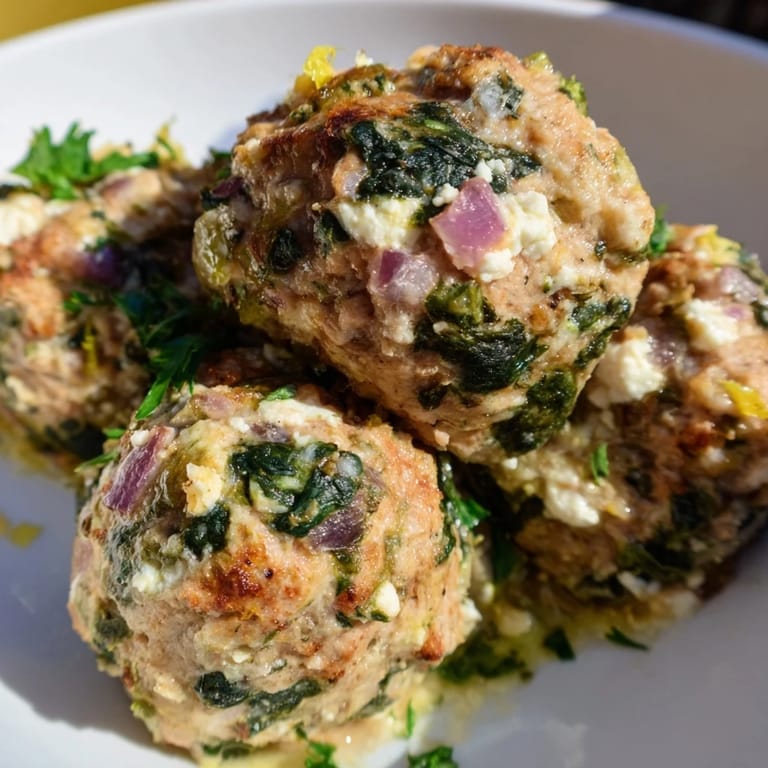
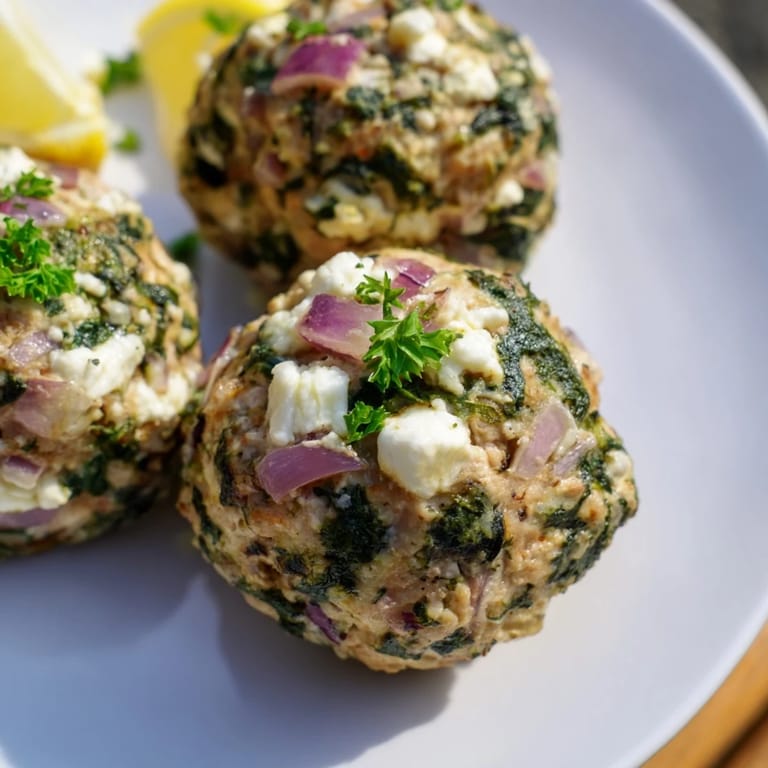
Save There's something about the smell of feta and fresh spinach hitting a hot oven that instantly transports me to a sunny Mediterranean afternoon. I stumbled onto this recipe on a Tuesday when I had ground turkey in the fridge and a half-wilted bunch of spinach I needed to use before it turned completely sad. Instead of tossing it into a boring stir-fry, I decided to mix it with crumbled feta and some dried herbs, form it into little balls, and let the oven do the work. Twenty minutes later, my kitchen smelled like a Greek seaside taverna, and I realized I'd accidentally created something I'd never stop making.
I made these for a casual weeknight dinner with friends who had just finished a hiking trip, and they devoured them straight off the sheet with their hands like they were starving. The lemon zest gave each bite this bright, almost surprising pop that had everyone reaching for more. I served them with tzatziki and warm pita, and someone asked if I'd learned to cook in Greece, which is the highest compliment I've ever received in my own kitchen.
Ingredients
- Ground turkey: The lean protein base that keeps these light but satisfying—it takes on all the Mediterranean flavors beautifully and stays juicy when baked properly.
- Fresh spinach, chopped: The secret weapon that keeps the meatballs tender from the inside and adds an earthy depth you can taste in every bite.
- Red onion, finely diced: I learned the hard way that size matters here—tiny pieces dissolve into the mix and add sweetness without chunks.
- Garlic cloves, minced: Two cloves gives you that unmistakable Greek kitchen flavor without overpowering the feta.
- Feta cheese, crumbled: This is where the magic happens—tangy, salty, and it creates little pockets of creaminess as it melts into the turkey.
- Breadcrumbs: These act as a binder and keep everything from becoming a dense, heavy ball that no one wants to eat.
- Large egg: The glue that holds it all together without needing anything else to help.
- Fresh parsley, chopped: A handful stirred into the mix and more sprinkled on top at the end brings everything to life.
- Dried oregano: This is what makes them taste Greek rather than Italian—don't skip it.
- Dried dill (optional): If you find it, add it; it's the flavor that made me pause mid-bite the first time I tasted it.
- Salt and black pepper: Season carefully because the feta is already salty.
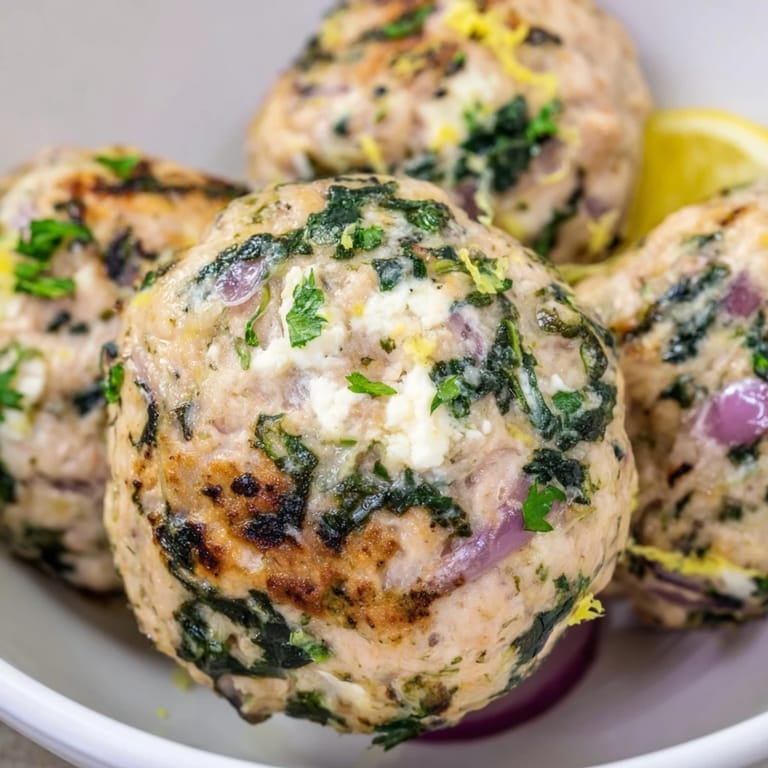
- Lemon zest: This half a lemon's worth of zest is the surprise that keeps people asking what they're tasting.
- Olive oil: Just enough to help them brown and keep them from sticking.
Tired of Takeout? 🥡
Get 10 meals you can make faster than delivery arrives. Seriously.
One email. No spam. Unsubscribe anytime.
Instructions
- Heat your oven and prep the stage:
- Preheat to 200°C (400°F) and line your baking sheet with parchment paper brushed lightly with olive oil. This small step means you won't spend thirty minutes scraping charred bits off your sheet later.
- Combine everything with a gentle hand:
- Dump all the ingredients into a large bowl and mix with your hands or a spatula until just barely combined—the moment when everything holds together but still looks a little loose. Overmixing turns them dense and tough, which I learned by making them that way the first time.
- Form balls with damp hands:
- Wet your hands slightly (this is the trick nobody tells you) and gently form the mixture into twenty golf ball-sized rounds, spacing them evenly on your prepared sheet. If your hands are dry, the mix sticks and falls apart; if they're damp, it slides right together.
- Give them a light drizzle:
- A light spray or drizzle of olive oil over each meatball helps them brown and keeps them moist inside.
- Bake until golden and cooked through:
- Slide them into the oven for 18–20 minutes, watching until they turn golden brown on top and a quick thermometer check shows 74°C (165°F) inside. The kitchen will smell so good you might think about making a second batch right now.
 Save
Save My favorite moment came when my niece, who claims to hate spinach, bit into one of these and immediately asked for three more. She spent the whole meal trying to figure out what was in them, and I let her guess wrong for as long as possible before telling her. Sometimes the best dishes are the ones that trick people into enjoying something they thought they didn't like.
Serving Suggestions That Actually Work
These meatballs are chameleons—they work as a main course, an appetizer, or something to snack on straight from the fridge the next day. I've served them with tzatziki for dipping, tucked into warm pita with tomatoes and cucumber, over rice with a side salad, or just scattered across a big platter of Greek salad. They're also surprisingly good cold the next day, which makes them perfect for meal prep or bringing to a picnic.
Make-Ahead and Storage Wisdom
I learned early on that these freeze beautifully before or after baking, which makes them the kind of recipe you can turn to when someone texts asking if you can bring dinner to their house on short notice. Form them and freeze on a sheet, then transfer to a bag, or bake and freeze in portions. Thaw overnight in the fridge and bake briefly to reheat, or pop a few from frozen into a 180°C oven for an extra 8–10 minutes.
Why These Beat Other Meatballs
The feta and spinach combination makes these feel fancy and Mediterranean without actually being complicated, and the lemon zest adds a brightness that regular meatballs don't have. They're protein-packed enough to be a real main course, but light enough that you don't feel weighed down. And because they're baked instead of pan-fried, there's less splatter, less oil, and way less attention they demand while cooking.
- You can make them entirely in one bowl and use one sheet pan, so cleanup is minimal.
- They stay juicy even when reheated because of the spinach and feta moisture, unlike leaner meatballs that dry out.
- The flavor keeps getting better as they sit, so these are actually better as leftovers than right out of the oven.
 Save
Save These meatballs remind me why home cooking matters—not because it's impressive or complicated, but because something small and made with intention tastes better than anything else. Make them once, and they'll become one of those recipes you return to whenever you need something that feels both comforting and a little bit special.
Recipe FAQs
- → What’s the best way to keep meatballs moist?
Gently mixing the ingredients without overworking ensures tenderness. Including feta and spinach adds moisture and flavor, while baking at the right temperature seals in juices.
- → Can I substitute spinach with another vegetable?
Yes, finely chopped kale or Swiss chard can be used as alternatives to spinach, offering a similar texture and nutrition profile.
- → How do I know when the turkey balls are cooked through?
They should reach an internal temperature of 74°C (165°F) and be golden brown on the outside, signaling they are fully cooked and safe to eat.
- → Is it possible to make these gluten-free?
Absolutely, just replace regular breadcrumbs with gluten-free alternatives like gluten-free crumbs or rolled oats to maintain texture.
- → What sides complement these meatballs well?
They pair wonderfully with tzatziki sauce, warm pita bread, fresh Greek salad, or steamed rice for a complete meal.
- → Can ground chicken be used instead of turkey?
Yes, ground chicken is a suitable substitute offering a similar texture and mild flavor that works well with spinach and feta.