 Save
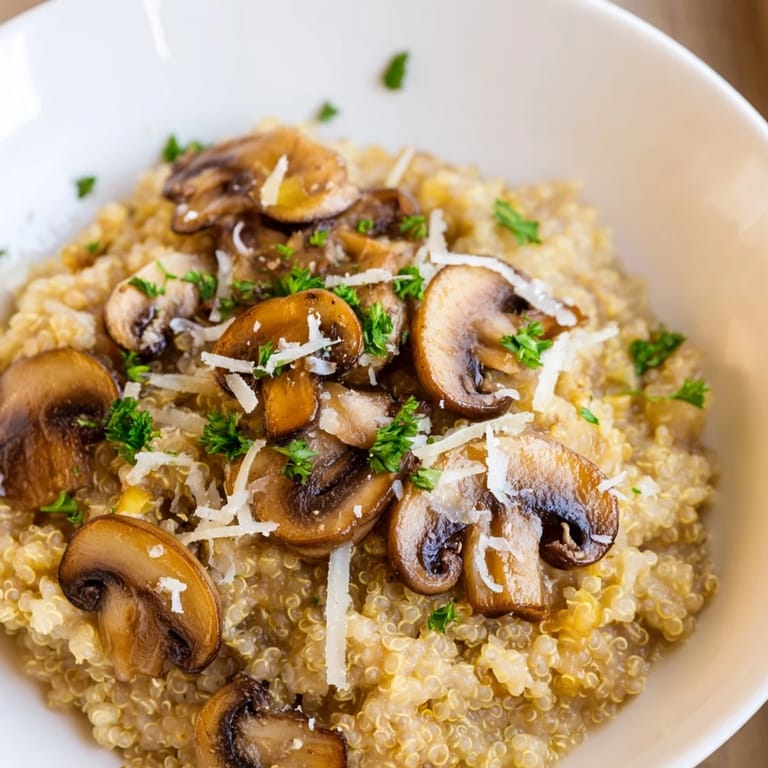
Save One rainy Tuesday, I was rummaging through the pantry when I spotted a forgotten box of quinoa behind the rice. Suddenly it hit me—why not try risotto with something entirely different? I'd been craving that creamy, cozy risotto feeling but wanted something more nutritious, and quinoa seemed like it could work beautifully if I treated it with the same patience and care as traditional rice. That evening, I layered in earthy mushrooms, a splash of white wine, and lots of stirring. The result was so silky and satisfying that it's become my go-to when I want something that feels indulgent but actually nourishes you.
I made this for my friend Maya on a cold evening when she was going through a rough patch. She's vegetarian and had been tired of the same pasta-based meals, so I thought risotto might lift her spirits. Watching her face light up when she tasted it—that creamy, mushroom-filled first bite—reminded me that sometimes the most meaningful gifts happen at the dinner table. She's made it three times since and swears it's the only risotto she'll make now.
Ingredients
- Cremini or mixed mushrooms (400 g): The earthiness here is everything; cremini gives you depth without being overpowering, but feel free to mix in some shiitake or oyster mushrooms if you want more complexity.
- Quinoa (200 g, rinsed): Rinsing removes the bitter coating and helps each grain cook independently, giving you that delicate texture rather than a gluey mess.
- Yellow onion (1 medium, finely chopped): The foundation of flavor; dice it small so it melts into the creamy base and doesn't have any harsh bite.
- Garlic (2 cloves, minced): Add it after the onion softens or it'll burn and turn bitter—timing matters.
- Vegetable broth (1 L, kept warm): Warm broth is non-negotiable because cold liquid will shock the quinoa and interrupt the cooking; keep it simmering in a separate pot.
- Dry white wine (120 ml): This adds acidity and a subtle floral note; Sauvignon Blanc or Pinot Grigio work beautifully.
- Unsalted butter (40 g): Use real butter, not margarine—it's only 50 minutes of your life, and the difference is worth it.
- Parmesan cheese (60 g, freshly grated): Grate it yourself right before using; pre-grated cheese has anti-caking agents that prevent it from melting smoothly into the creamy sauce.
- Heavy cream (2 tbsp, optional): This is your secret weapon for extra silkiness, though the dish is wonderful without it if you prefer lighter fare.
- Olive oil (2 tbsp): Good quality helps here since it's tasted directly in the early stages of cooking.
- Sea salt and black pepper: Taste as you go; you'll likely need more salt than you think because the broth may already be seasoned.
- Fresh thyme (1 tbsp) or dried (1 tsp): This herb bridges the gap between the earthy mushrooms and delicate quinoa beautifully.
- Fresh parsley (2 tbsp): Scatter it on at the end for brightness and a reminder that this is fresh and alive.
Tired of Takeout? 🥡
Get 10 meals you can make faster than delivery arrives. Seriously.
One email. No spam. Unsubscribe anytime.
Instructions
- Build your flavor base:
- Heat the oil and butter in a large saucepan over medium heat, then add the onion. Listen for a gentle sizzle and watch until the onion turns translucent and soft, usually 2–3 minutes. You're not browning it yet, just coaxing out its sweetness.
- Bloom the garlic:
- Stir in the minced garlic and let it cook for just 1 minute, stirring constantly so it releases its fragrance without burning. The aroma should smell bright and warm, not harsh or acrid.
- Caramelize the mushrooms:
- Add the sliced mushrooms and thyme, then resist the urge to stir constantly. Let them sit for 2–3 minutes until they start to brown on the bottom, then stir and repeat. After 6–8 minutes total, they'll be deeply golden and most of their moisture will have evaporated; this concentration is where the earthy magic happens.
- Toast the quinoa:
- Add the rinsed quinoa and stir it around for 1–2 minutes so each grain gets coated in the oil and butter. You'll smell a subtle toasted grain aroma—that's your cue that it's ready to absorb the liquid.
- Deglaze with wine:
- Pour in the white wine while stirring, and keep stirring until most of it has been absorbed and you see the bottom of the pan between strokes. This takes 2–3 minutes and helps build a creamy foundation.
- Add broth gradually:
- Starting now, add the warm broth one ladleful (about 250 ml) at a time, stirring frequently. Wait until most of each addition is absorbed and the mixture looks creamy before adding the next ladleful. This patient stirring is what creates that signature risotto creaminess, even without rice.
- Cook until tender and creamy:
- Keep adding broth and stirring for 20–25 minutes total until the quinoa grains are tender but still have a slight bite. You may not use all the broth—stop when the texture is creamy and luxurious, not soupy. Taste a spoonful; it should feel silky on your tongue and the grains should have no crunch.
- Finish with richness:
- Remove from heat, then stir in the remaining butter, grated Parmesan, and cream (if using). The residual heat will melt everything into a glossy, cohesive sauce. Season carefully with salt and pepper, tasting as you go.
- Rest and serve:
- Cover the pan and let it sit for 2 minutes—this resting period allows the risotto to set slightly so it's creamy but not runny. Serve immediately in warmed bowls, garnished with fresh parsley and a scatter of extra Parmesan.
 Save
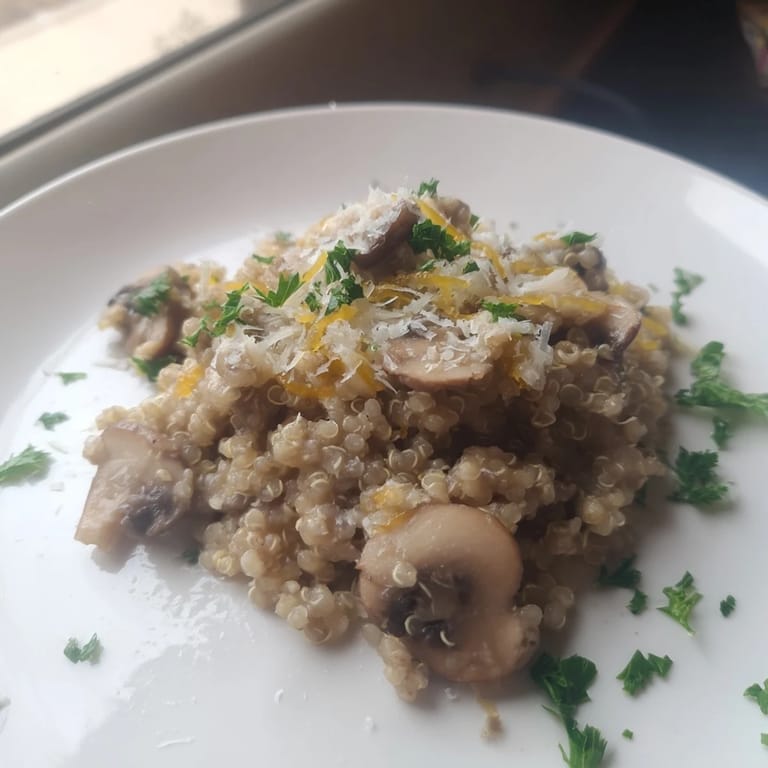
Save There's a moment near the end of stirring when the dish suddenly transforms—the mixture goes from looking a bit thin and granular to silky and cohesive in what feels like thirty seconds. That shift is when you know it's going to be perfect. My partner calls this the "risotto moment" now, and we always exchange a little look when it happens.
Why Quinoa Works So Well Here
Quinoa has an inherent creaminess that most people don't expect, especially if they've only had it in grain bowls where it stays separate and fluffy. When you subject it to the same patient stirring as arborio rice, the starches slowly release and create a sauce that feels just as luxurious. The texture is actually lighter and more delicate than rice-based risotto, which means you can eat a full bowl without feeling like you need a nap afterward. Plus, it's a complete protein containing all nine amino acids, so this dish quietly nourishes you in ways that traditional risotto doesn't.
Mushroom Magic in the Pan
The mushrooms are doing more than just adding flavor—they're creating an umami foundation that makes every spoonful feel savory and satisfying. I used to think risotto needed meat to feel complete, but once I tasted how deeply the mushrooms could sing, especially if you let them brown properly and concentrate their flavor, I realized that wasn't true at all. The key is patience with the mushroom step; don't rush it or stir constantly, because browning happens when you let them sit undisturbed on the hot surface for a minute or two.
Variations and Personal Twists
This recipe is a canvas, and I've learned to treat it as such. Some nights I'll add a handful of fresh spinach in the last minute of cooking, letting it wilt into the creamy sauce. Other times I've stirred in roasted asparagus or fresh peas, and once I added a handful of sun-dried tomatoes which gave everything a subtle sweetness. The point is that you can adapt this to whatever vegetables are in your fridge or whatever mood you're in, as long as you keep the core technique intact. The risotto framework stays the same; everything else is up to you.
- Try a handful of fresh spinach or roasted asparagus stirred in during the last minute of cooking.
- A small drizzle of truffle oil at the end elevates it to dinner-party territory.
- For vegan versions, use vegan butter and nutritional yeast instead of Parmesan, and the texture stays creamy and delicious.
 Save
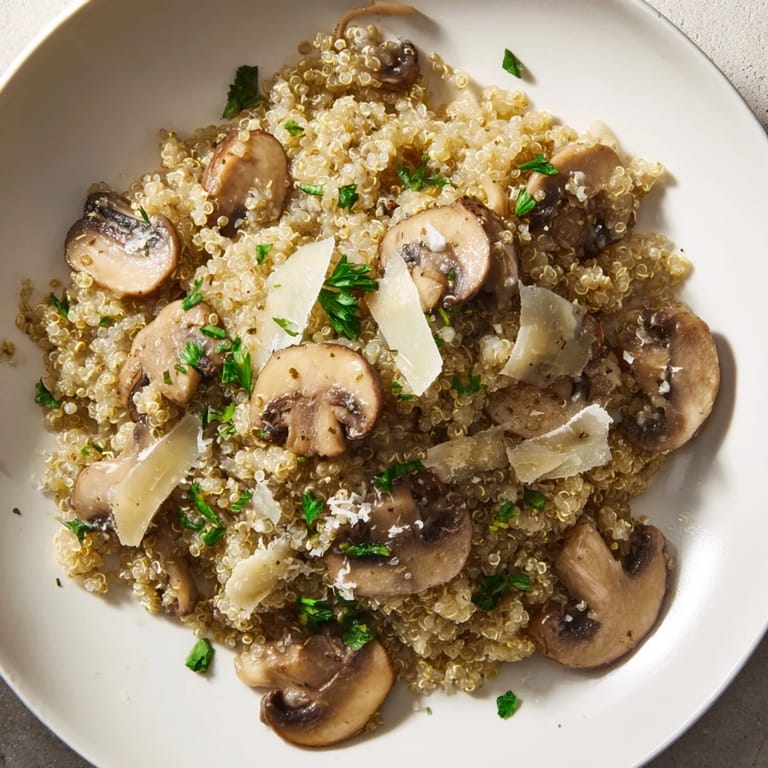
Save This dish has a way of turning an ordinary evening into something worth remembering, whether you're cooking for yourself or sharing it with someone who needs feeding. Once you master this technique, you'll return to it again and again.
Recipe FAQs
- → Can I use different mushrooms for this dish?
Yes, cremini, button, or mixed mushrooms all work well, each adding unique earthy notes.
- → Is quinoa cooked like traditional risotto rice here?
Quinoa is toasted and simmered gradually in broth and wine, giving a creamy texture similar to classic risotto.
- → How can I make this dish vegan?
Swap butter for plant-based alternatives and omit Parmesan or use a plant-based cheese substitute.
- → What herbs complement the flavors best?
Fresh thyme and parsley add brightness and aromatic freshness, elevating the dish’s depth.
- → Can this be prepared ahead and reheated?
It’s best served fresh, but leftovers reheat well gently on low heat with a splash of broth to restore creaminess.