 Save
Save I was standing in my kitchen on a drizzly Saturday morning, craving something warm and comforting but not sweet. The idea of focaccia came to me—I'd seen it at bakeries but never tried making it myself. I pulled out my biggest bowl and decided to just go for it. The dough came together faster than I expected, sticky and alive under my hands. By lunchtime, the whole apartment smelled like a Italian bakery, and I knew I'd stumbled onto something I'd make again and again.
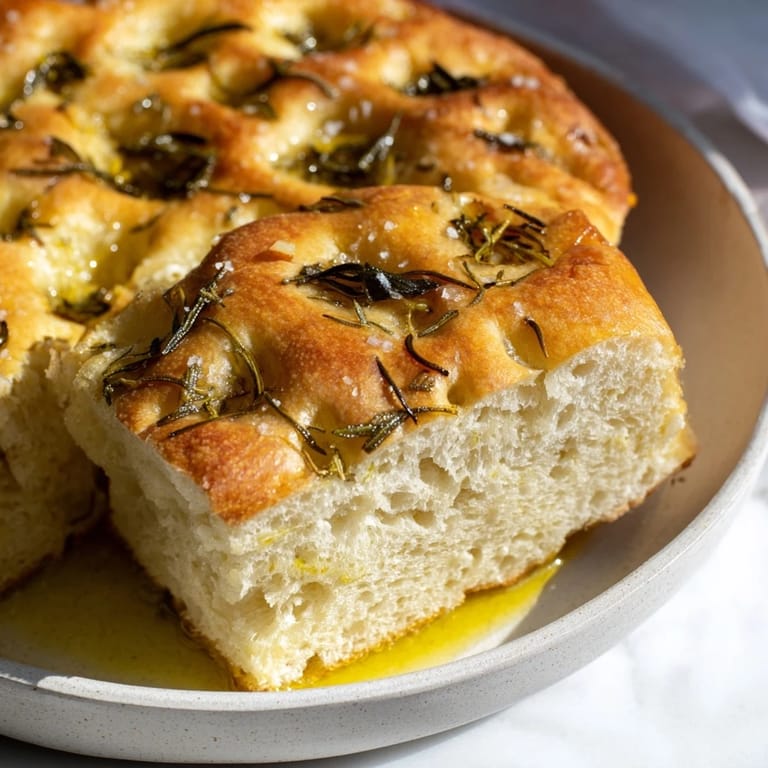
The first time I brought this to a dinner party, I watched people pull it apart with their hands before the main course even arrived. Someone said it tasted better than the focaccia from the Italian place downtown, and I tried not to look too proud. I'd dimpled the dough a little too enthusiastically, so it had these deep pockets of olive oil and salt that everyone kept going back for. That night, I realized bread doesn't have to be intimidating—it just has to be honest.
Ingredients
- Bread flour: The higher protein content gives you that chewy, airy crumb, but I've used all purpose in a pinch and it still worked beautifully.
- Instant dry yeast: No need to proof it first, just mix it right in and let it do its quiet magic while you go about your day.
- Fine sea salt: This goes in the dough for flavor, but don't skip the flaky salt on top—it's what makes every bite sing.
- Extra virgin olive oil: Use the good stuff here, it's not just for cooking, it becomes part of the flavor you'll taste in every golden edge.
- Lukewarm water: Too hot and you'll kill the yeast, too cold and nothing happens, so aim for bathwater warm.
- Fresh rosemary: I strip the leaves off the stem and chop them roughly, the smell alone makes me happy.
- Flaky sea salt: Those big, crunchy crystals on top are non negotiable, they catch the light and crunch between your teeth.
Tired of Takeout? 🥡
Get 10 meals you can make faster than delivery arrives. Seriously.
One email. No spam. Unsubscribe anytime.
Instructions
- Mix the dry ingredients:
- In a large bowl, whisk together the bread flour, instant yeast, and fine sea salt until everything is evenly distributed. This step takes thirty seconds but sets up everything that follows.
- Add the wet ingredients:
- Pour in the olive oil and lukewarm water, then stir with a wooden spoon or your hand until a shaggy, sticky dough forms. It won't look pretty yet, and that's exactly right.
- Knead the dough:
- Turn it out onto a lightly oiled counter and knead for eight to ten minutes, folding and pressing until it becomes smooth and elastic. Your arms will feel it, but the dough will transform under your hands.
- First rise:
- Place the dough in a lightly oiled bowl, cover it with plastic wrap or a damp towel, and let it rise in a warm spot until it doubles in size, about an hour. I usually set mine near a sunny window.
- Prepare the pan:
- Line a baking sheet with parchment paper and drizzle it with a tablespoon of olive oil, spreading it around with your fingers. This keeps the bottom from sticking and adds a crispy base.
- Shape the dough:
- Place the risen dough onto the prepared sheet and use your fingertips to gently stretch and press it to fill the pan. Cover it again and let it puff up for another thirty minutes.
- Preheat the oven:
- Set your oven to 220°C (430°F) while the dough takes its second rise. The hot oven is what gives you that golden, blistered top.
- Dimple and top:
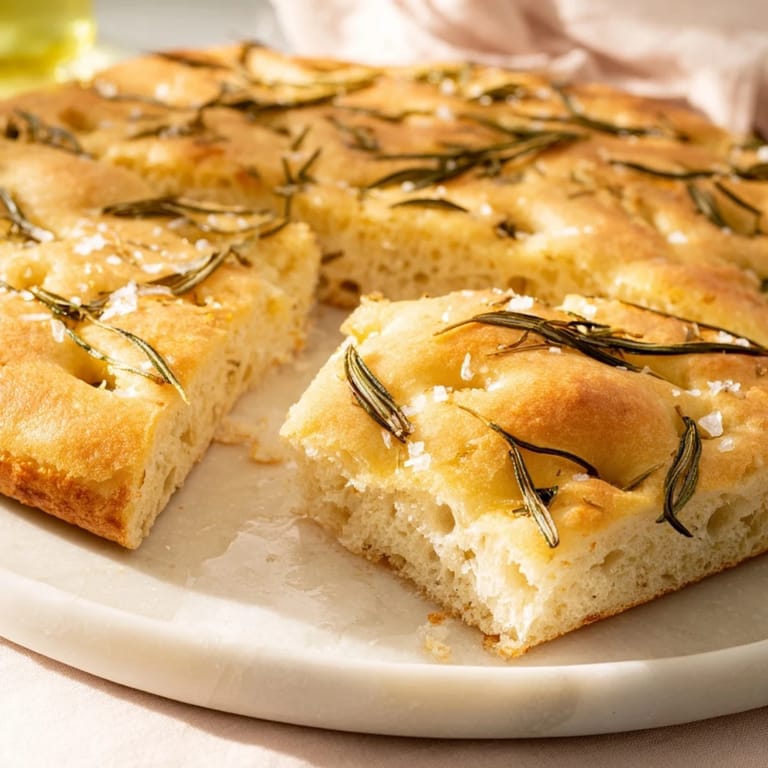
- Press your fingertips all over the dough to create deep dimples, then drizzle with the remaining olive oil and sprinkle the chopped rosemary and flaky sea salt evenly across the surface. Don't be shy, this is where the magic happens.
- Bake:
- Slide the pan into the hot oven and bake for twenty to twenty five minutes, until the focaccia is golden brown and crisp around the edges. The smell will tell you when it's close.
- Cool and serve:
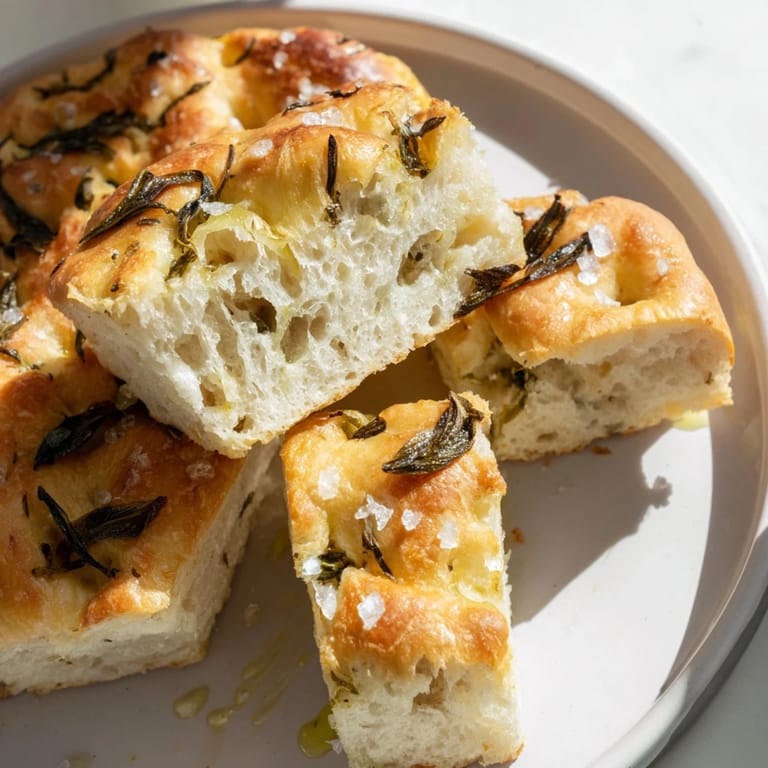
- Let it cool on the pan for a few minutes, then slice it into squares or tear it into rustic pieces. Serve it warm or at room temperature, and watch it disappear.
 Save
Save I made this on a Sunday afternoon when a friend stopped by unexpectedly, and we ended up sitting on the kitchen floor eating warm focaccia with our hands, dipping it in balsamic vinegar and laughing about nothing in particular. It wasn't fancy, but it felt like exactly what food is supposed to be—simple, generous, and worth sharing. I think that's when I realized this recipe wasn't just about bread, it was about making space for people.
How to Store and Reheat
Focaccia is best the day you bake it, but I've wrapped leftovers in foil and kept them on the counter overnight. To bring it back to life, I warm it in a low oven for about ten minutes, and it crisps up like it just came out. If you freeze it, wrap it tightly and reheat straight from frozen, it holds up surprisingly well.
Ways to Make It Your Own
I've pressed halved cherry tomatoes into the dough before baking, and they burst into sweet, jammy pockets that contrast beautifully with the salt. Sliced olives, caramelized onions, or even thin slices of garlic work just as well. Once you get the basic dough down, you can top it with whatever makes you happy, and it will still turn out great.
Serving Suggestions
I love serving this alongside soups, especially tomato or minestrone, where you can use it to soak up every last bit. It also makes an incredible base for sandwiches, or you can just set it out with olive oil and balsamic for dipping while people gather. Sometimes I'll slice it horizontally and use it for panini, and the crispy crust holds up beautifully.
- Pair it with a simple green salad and call it lunch.
- Serve it warm as an appetizer with whipped ricotta or hummus.
- Use leftovers to make croutons by cubing and toasting them with olive oil and garlic.
 Save
Save Every time I pull this out of the oven, I'm reminded that some of the best things in cooking are also the simplest. I hope you make this, tear into it while it's still warm, and feel exactly what I felt that first drizzly Saturday.
Recipe FAQs
- → What type of flour works best for focaccia?
Bread flour is ideal as its higher protein content helps develop the dough's structure, resulting in a fluffy texture.
- → Why is olive oil important in this bread?
Olive oil enriches the dough, adds moisture, and helps create a tender crumb and crisp crust when baked.
- → How do I achieve the characteristic dimples on focaccia?
Use your fingertips to gently press into the dough after the second rise, creating small indentations that hold olive oil and toppings.
- → Can I add other toppings besides rosemary and sea salt?
Yes, additions such as halved cherry tomatoes or sliced olives can be pressed into the dough before baking for extra flavor.
- → Is it better to serve focaccia warm or at room temperature?
Focaccia is delicious both warm and at room temperature; warming enhances aroma while cooler slices are easier to handle.