 Save
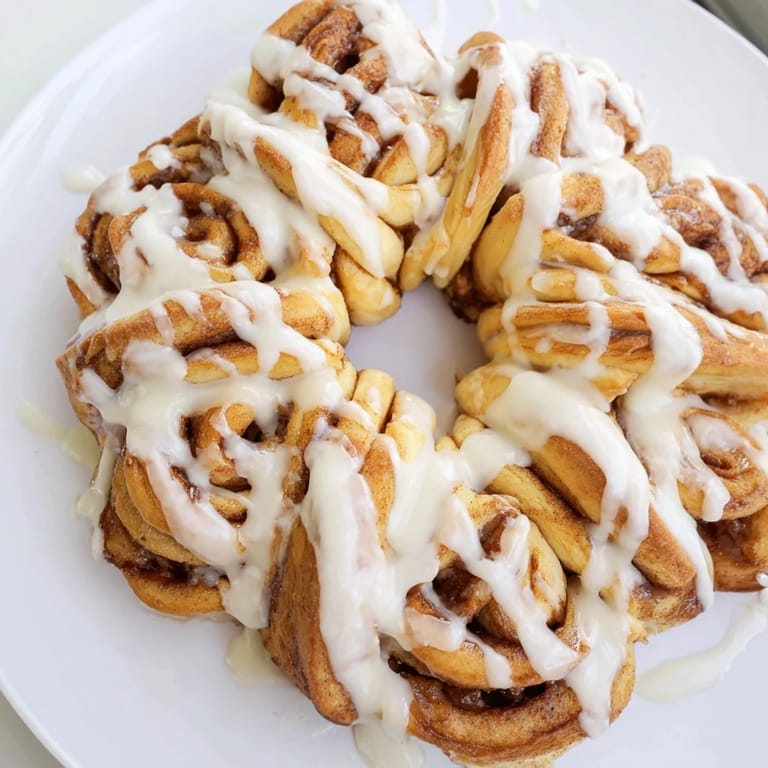
Save My sister called me in a panic on Christmas Eve, insisting we needed something stunning to serve alongside breakfast coffee, something that would make everyone stop and say wow before they even tasted it. I'd been experimenting with yeasted doughs and happened to have a wild idea that afternoon—what if cinnamon rolls didn't stay boring spirals on a plate, but became something with personality, something you could actually pick apart with your hands and share? That's how this snowflake was born, and now it's become the centerpiece of every winter gathering in our house.
I'll never forget the moment my ten-year-old nephew twisted those dough strips into points, completely focused, his tongue poking out in concentration, then looked up like he'd just accomplished something impossible when it actually started to look like a snowflake. That's when I realized this recipe isn't just about the taste—it's about the memory of making something together that turns heads.
Ingredients
- All-purpose flour (3 1/4 cups): Use good quality flour here—it'll give you that silky, elastic dough that's actually pleasant to knead.
- Active dry yeast (2 1/4 tsp): Make sure it's fresh and stored properly, or your dough will be stubborn and won't rise the way it should.
- Warm milk (3/4 cup): The temperature really matters; if it's too hot it'll kill the yeast, too cool and nothing happens—aim for 110°F.
- Unsalted butter (1/4 cup melted, plus 1/4 cup softened): I use unsalted so I can control the salt level and taste the dough's natural sweetness.
- Granulated sugar (1/4 cup): This feeds the yeast and gives the dough a gentle sweetness that lets the cinnamon shine.
- Packed light brown sugar (1/2 cup): Brown sugar has molasses which makes the filling deeper and more complex than white sugar ever could.
- Ground cinnamon (2 tsp): Don't skimp on quality—cheap cinnamon tastes dusty and flat; good cinnamon tastes warm and alive.
- Egg (1 large, room temperature): Room temperature eggs blend in smoothly and create a richer crumb structure than cold ones.
- Salt (1/2 tsp): Just enough to balance everything without making it taste salty.
- Powdered sugar (1 cup) and milk (2–3 tbsp): The icing is your final flourish, so don't rush it—make it smooth and pourable.
- Pure vanilla extract (1/2 tsp): Pure vanilla, not imitation, tastes like it actually means something.
Tired of Takeout? 🥡
Get 10 meals you can make faster than delivery arrives. Seriously.
One email. No spam. Unsubscribe anytime.
Instructions
- Bloom your yeast:
- Combine warm milk, sugar, and yeast in a large bowl and let it sit for 5–10 minutes until it looks foamy and smells alive. This step tells you immediately whether your yeast is working or if you need to start over.
- Build the dough:
- Stir in melted butter, egg, and salt, then gradually fold in flour until a shaggy dough comes together. Don't overmix—you want soft and slightly sticky, not tight and tough.
- Knead to smoothness:
- Turn the dough onto a lightly floured surface and knead for 5–7 minutes until it's smooth and bounces back when you poke it. You'll feel it change under your hands from rough to satiny.
- First rise:
- Place the dough in a greased bowl, cover it loosely, and let it sit in a warm spot (a turned-off oven with the light on works great) for about 1 hour until it's doubled. This is when you can go do other things—or just watch it rise, which is honestly kind of peaceful.
- Prep your workspace:
- Preheat the oven to 350°F and line a baking sheet with parchment paper. You want everything ready because once you start shaping, you'll want to move smoothly.
- Divide and roll:
- Punch down the risen dough and divide it into 3 equal pieces—I use a kitchen scale to be precise about this. Roll each piece into a thin 12-inch circle on a clean surface.
- Layer and fill:
- Place the first dough circle on your baking sheet. Spread half the softened butter all over it, then sprinkle half the cinnamon-sugar mixture evenly across. Stack the second circle on top, butter the remaining half, sprinkle the remaining cinnamon sugar, then top with the final dough circle.
- Create the snowflake shape:
- Place a small glass in the exact center (don't push down, just rest it there) and use a sharp knife to cut the dough into 16 strips radiating outward from the glass like spokes. This takes a steady hand but it's easier than it sounds.
- Twist into points:
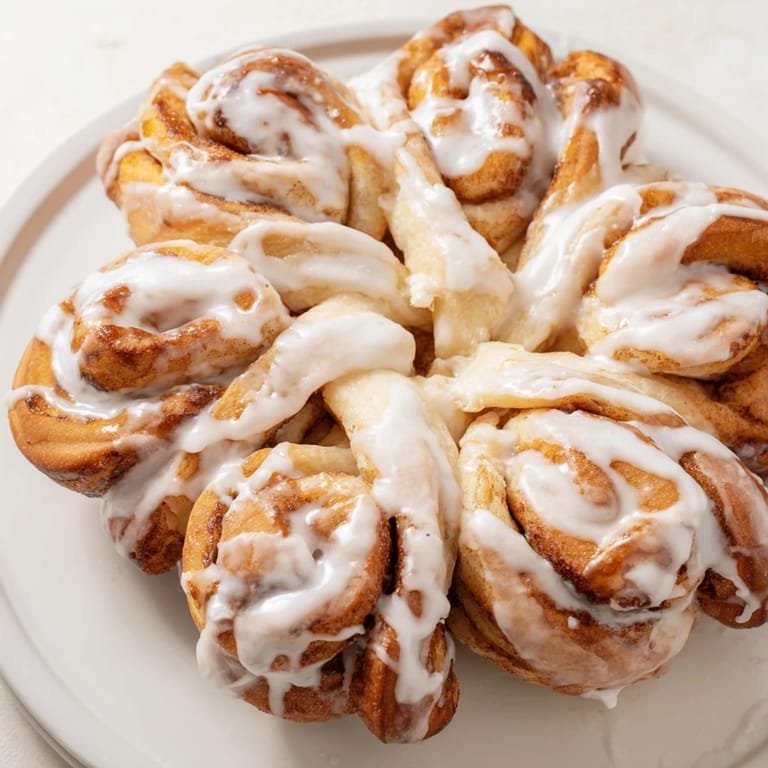
- Take two adjacent strips and twist them around each other twice, then pinch the ends together to form a little point. Work your way around until all 16 strips are twisted—this is the part that makes it look like magic.
- Remove the glass and rest:
- Carefully lift out the glass (it should come out cleanly) and let the whole snowflake rise, covered with a towel, for about 15 minutes. This second rise keeps it tender.
- Bake to golden:
- Bake for 22–25 minutes until the whole thing is a rich golden brown. Your kitchen will smell incredible and you'll be counting the minutes.
- Ice while warm:
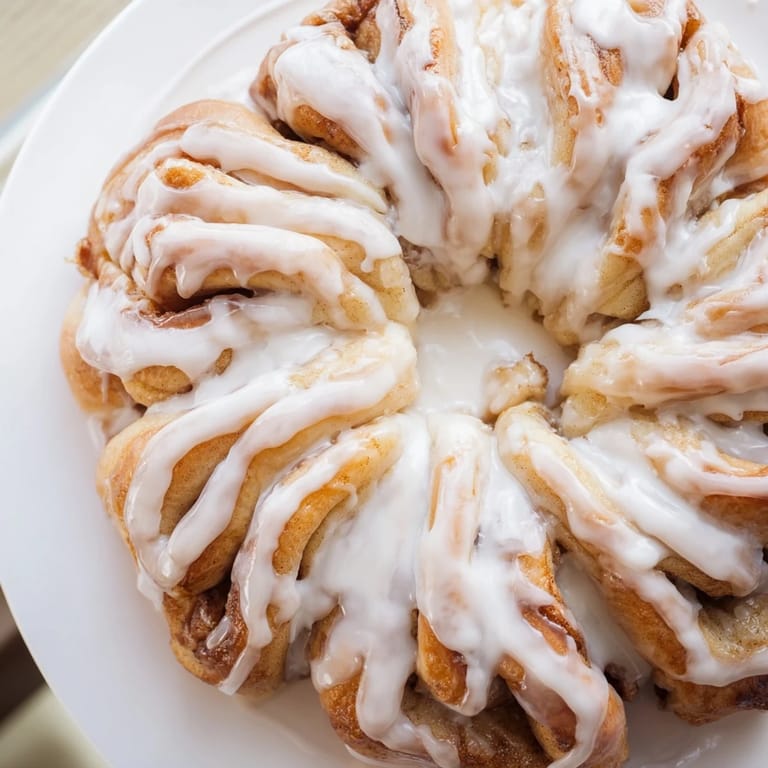
- Let it cool for just 10 minutes, then whisk together powdered sugar, milk, and vanilla until smooth and drizzly. Pour it over the warm snowflake so it settles into all the crevices.
 Save
Save What stuck with me most wasn't even the taste, it was the moment my whole family started passing pieces around the table, each person reaching for their favorite twisted point, laughing because nobody wanted to be the one to ruin the pattern. That's when I understood this recipe wasn't just breakfast—it was permission to slow down and share something that took time to make.
Why This Recipe Becomes a Tradition
Over the years, I've made this for neighbors, for book club gatherings, for the morning after friends sleep over, and every single time people ask for the recipe immediately. It's not because it's complicated—it's because it announces itself the moment you walk into the room. There's something about a homemade yeasted pastry that says you actually care, and then the fact that it's shaped like a snowflake means it captures people's attention before they even taste it. The best part is that once people realize they can just pull the pieces apart, they relax and stop thinking about presentation and just enjoy the moment.
Flavor Layers That Actually Work
What makes this special isn't any single ingredient—it's that you're getting three different textures and flavor experiences in one bite. The soft, pillowy dough is warm and comforting. The cinnamon-brown sugar filling is concentrated and sweet, with that warmth cinnamon brings. Then the vanilla icing on top cuts through everything with brightness and adds a little crunch as it sets. I've tried shortcutting this by skipping the icing or using less cinnamon, and it never feels complete. Every layer matters.
Making It Your Own
The beauty of this recipe is that it's flexible once you understand the fundamentals. I've made versions with chopped toasted pecans mixed into the cinnamon sugar, which adds a nutty richness that's unexpected. Someone brought raisins one time, plumped them in warm water first, and scattered them throughout, and honestly it was lovely. You could even drizzle a little cream cheese icing instead of vanilla if you wanted to get fancy, or dust the whole thing with fleur de sel before baking for a sweet-salty thing that's pretty sophisticated for breakfast. The dough itself is sturdy enough that it can handle additions—just don't go overboard or it'll be heavy instead of light.
- Heavy cream can replace half the milk for an even richer, more decadent dough.
- Brush the baked snowflake with melted butter right out of the oven if you want extra shine and flavor.
- Serve it warm with hot chocolate or really good coffee—that's when it's at its absolute best.
 Save
Save This recipe has taught me that sometimes the most memorable meals aren't the hardest ones to make—they're the ones you put actual thought and care into, the ones that feel like you're sharing a piece of yourself. That's what this snowflake does every time.
Recipe FAQs
- → How do I shape the dough into the snowflake pattern?
Roll the dough into three equal circles stacked with cinnamon sugar layers. Cut into 16 strips around a glass center, twist adjacent strips twice, pinch ends to form points, repeat all pairs, then remove the glass.
- → Can I substitute any ingredients to change the flavor?
Yes, you can replace half the milk with heavy cream for a richer dough or add chopped toasted pecans or raisins to the filling for extra texture and taste.
- → What is the best way to ensure the dough rises properly?
Use warm milk about 110°F and proof the yeast until frothy before mixing. Let the dough rise in a warm, draft-free place covered until doubled in size.
- → How should I store leftovers to keep them fresh?
Store cooled leftovers in an airtight container at room temperature for up to two days or freeze for longer. Reheat gently before serving to restore softness.
- → Can this be prepared ahead of time?
Yes, you can prepare, shape, and place the dough in the fridge overnight for a slow rise, then bake fresh the next day by allowing it to come to room temperature first.