 Save
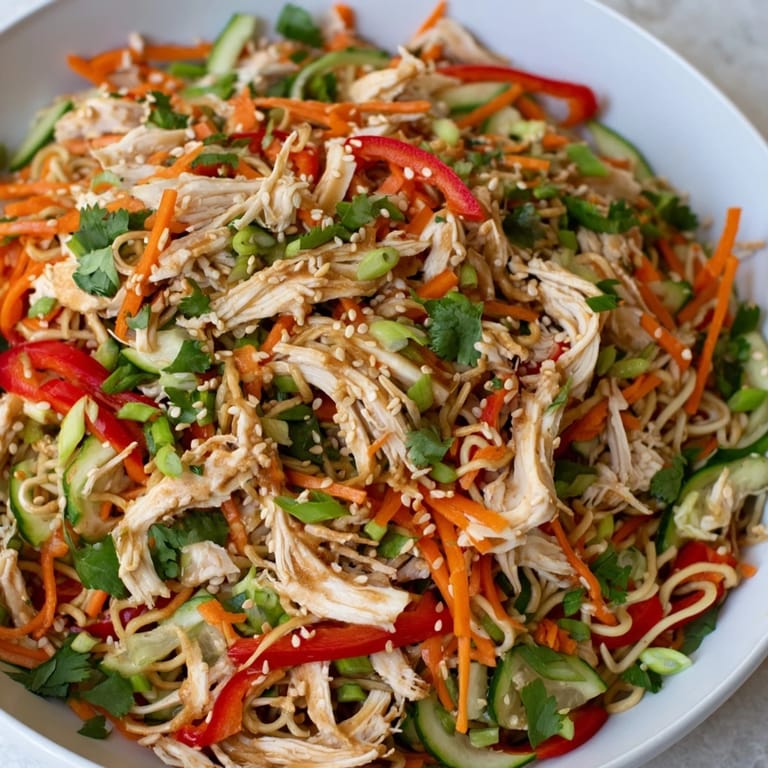
Save There's something about a bowl of chilled noodles that catches you off guard on a sweltering afternoon—suddenly you're not forcing yourself to eat, you're actually hungry. I discovered this salad by accident, really, when I had leftover shredded chicken, a half-empty vegetable drawer, and the kind of heat that made cooking anything warm feel like betrayal. The sesame dressing came together in minutes, and what emerged was bright, alive, and exactly what the moment needed. It's become my answer to those days when you want something substantial but won't heat up the kitchen.
I made this for a picnic last summer when my friend mentioned she was tired of heavy meals, and watching her take that first bite—eyes lighting up, immediately asking for the recipe—that's when I knew this wasn't just a way to use up leftovers. It became the dish I reach for whenever I need something that feels indulgent but leaves you feeling refreshed instead of weighed down.
Ingredients
- Thin egg noodles or rice noodles (250 g): These cook quickly and have just enough structure to hold the dressing without getting mushy; rice noodles work beautifully if you're keeping things gluten-free.
- Cooked chicken breasts (2, shredded, about 300 g): Shredding by hand while it's still warm makes a difference—the meat holds the dressing better than chunky cuts.
- Carrot (1 medium, julienned): The natural sweetness balances the savory dressing, and julienning gives it a delicate texture that actually gets eaten instead of pushed aside.
- Red bell pepper (1, thinly sliced): Adds color and a slight crunch that doesn't fade even after chilling.
- Cucumber (1, deseeded and julienned): Deseeding prevents watery salad—a small step that changes everything about the final texture.
- Spring onions (2, sliced): Raw onion brings a sharp, clean note that the dressing needs to come alive.
- Fresh cilantro (2 tbsp, chopped): Don't skip this; it's not garnish, it's the herb that ties the whole flavor story together.
- Toasted sesame oil (3 tbsp): This is where magic happens—toasted oil smells like a better version of itself and tastes more intense, so you use less without sacrificing depth.
- Soy sauce (2 tbsp): The umami anchor that makes everything taste more like itself.
- Rice vinegar (2 tbsp): Use rice vinegar specifically; regular vinegar is too aggressive for something meant to be gentle and balanced.
- Honey or maple syrup (1 tbsp): A touch of sweetness that rounds out the salt and acid without making it dessert.
- Smooth peanut butter or tahini (1 tbsp): Creates the dressing's body and richness; tahini works if allergies are a concern and honestly tastes equally good.
- Fresh ginger (1 tsp, grated): Grate it fresh right before mixing—the difference between living, bright flavor and something muted is that simple.
- Garlic clove (1, minced): Just one; you want it as an undertone, not a shout.
- Chili flakes (1 tsp, optional): A pinch gives warmth without actual heat—the kind of spice that makes you want another bite.
- Toasted sesame seeds (2 tbsp, for garnish): Buy them already toasted; this is one place where buying pre-prepped saves you a step worth saving.
- Lime wedges (optional): A squeeze at the end brightens everything; serve them on the side so people can adjust to their taste.
Tired of Takeout? 🥡
Get 10 meals you can make faster than delivery arrives. Seriously.
One email. No spam. Unsubscribe anytime.
Instructions
- Cook and cool the noodles:
- Boil according to package directions, drain, then run under cold water while stirring gently to prevent clumping. The cold water stops the cooking immediately and keeps them from turning to paste. Spread them on a plate while you prep everything else so they stay loose and separate.
- Assemble the base:
- In your largest bowl, combine the cooled noodles, chicken, and all the vegetables in one confident pile. There's a moment where it looks like too much, but the dressing will coax it all together.
- Build the dressing:
- Whisk sesame oil, soy sauce, rice vinegar, honey, peanut butter, ginger, garlic, and chili flakes in a small bowl until it's completely smooth with no peanut butter lumps. Taste it straight from the spoon—it should taste slightly more intense than you want the final salad to be.
- Bring it together:
- Pour the dressing over everything and toss with intention, making sure the noodles especially are well coated. This is where patience pays off; don't rush the tossing or you'll break the vegetables.
- Finish and rest:
- Transfer to a serving dish and shower with toasted sesame seeds and a few cilantro leaves. Chill for at least 15 minutes before serving so the flavors have time to know each other.
 Save
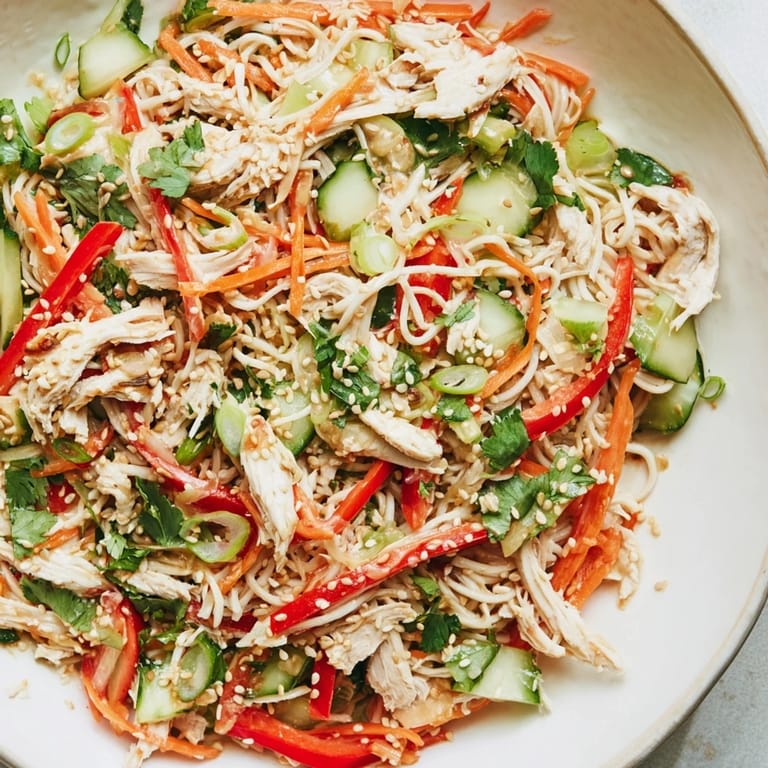
Save A friend once told me that this was the first salad she'd ever finished completely, sauce and all, which says something about how satisfaction and good ingredients align. It stopped being just another thing I made and became a small moment where I got the cooking right.
Making It Your Own
The architecture of this salad is flexible in ways that matter. If you have snap peas instead of cucumber, they work equally well; if your cilantro situation is nonexistent, mint or basil can step in without breaking anything. I've added shredded carrots alongside the julienned ones just for a different texture, and sometimes I throw in a handful of edamame for extra body. The point is to trust the dressing—it brings everything together, so what goes in it is less important than the ratio of things being good.
Protein Variations
Rotisserie chicken is your friend here; it saves the cooking step and sometimes actually tastes better than chicken you've cooked yourself. Tofu shredded into similar pieces absorbs the dressing beautifully and makes this vegetarian without apology. I've even used shrimp when I wanted something lighter, and the dressing carries it well. The chicken is the template, but the salad doesn't belong to it.
Timing and Storage
Make this in advance if you want—it's actually better when the flavors have had time to meld. You can keep the components separate in the fridge and toss everything together an hour before eating, or build the whole thing and let it chill. It stays good for about two days before the vegetables start giving up their water, so it's perfect for meal prep or taking to someone's house.
- Toss it again gently right before serving if it's been sitting for hours.
- Keep lime wedges separate and add them only for each serving so the acid doesn't over-process the vegetables.
- This is the kind of salad that tastes good at room temperature too, if you find yourself eating it straight from the fridge on a lazy afternoon.
 Save
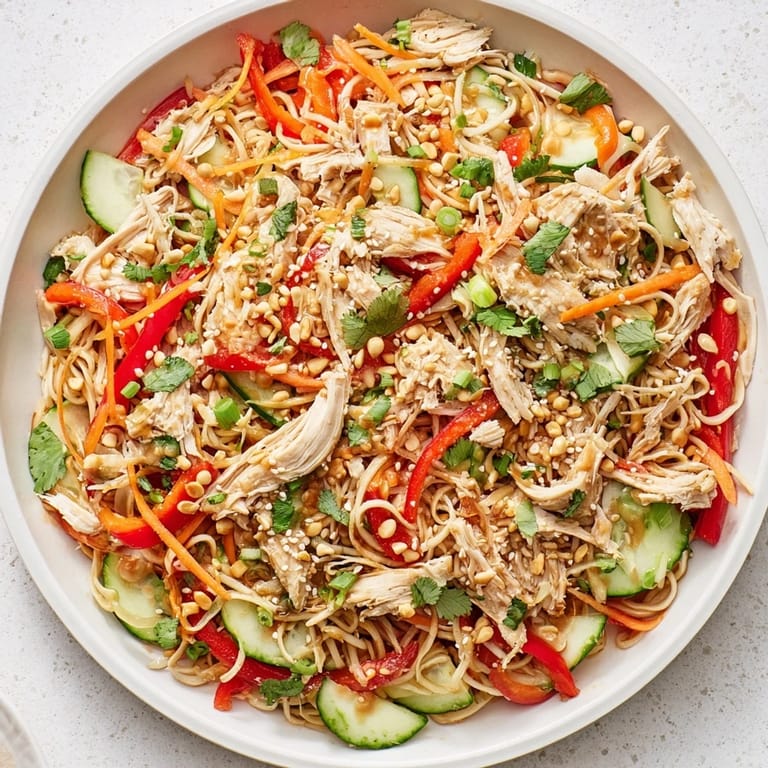
Save This salad taught me that sometimes the best meals come from working with what you have instead of what a recipe demands. It's the kind of dish that makes you feel like you understand something true about cooking.
Recipe FAQs
- → Can I substitute tofu for the chicken?
Yes, shredded tofu works well as a plant-based alternative, providing a similar texture and protein boost.
- → What noodles work best in this dish?
Thin egg noodles or rice noodles are recommended for their texture and ability to absorb the savory dressing.
- → How long should I chill the salad before serving?
Chilling for up to 2 hours allows flavors to meld while keeping the dish refreshing and crisp.
- → Can I make the sesame dressing spicier?
Yes, adding or increasing chili flakes enhances the spice level without overpowering the balance of flavors.
- → Are there gluten-free options for this dish?
Use rice noodles and gluten-free soy sauce (tamari) to maintain a gluten-free profile.