 Save
Save There's something about a skillet that smells like cumin and tomatoes on a lazy weekend morning that makes everything feel possible. I discovered shakshuka years ago at a tiny café tucked between two buildings in Istanbul, where an older woman was stirring a copper pot with such confidence I couldn't look away. The eggs arrived looking almost too beautiful to disturb, nestled in that russet sauce like little treasures. When I finally tried making it at home, I realized it wasn't complicated at all—just good ingredients and patience, a combination that somehow felt revolutionary after years of rushing breakfast.
My neighbor invited himself over one Sunday after smelling it cooking, and I had just enough eggs left for one more bowl. We sat on the kitchen counter, dunking pita into the sauce while it was still steaming, and he kept saying things like "I didn't know breakfast could be like this." Somehow that moment—unexpected company, imperfect but genuine—became the reason I make this dish constantly now.
Ingredients
- Onion (1 large, finely chopped): The foundation that sweetens and mellows as it cooks, creating depth in the sauce.
- Red and yellow bell peppers (1 of each, diced): These add brightness and natural sweetness; the color contrast matters more than you'd think.
- Garlic (3 cloves, minced): Wait until the peppers soften before adding this, or it burns and tastes bitter.
- Spinach (2 cups baby, optional): Wilts down dramatically and adds an earthiness that rounds out the spices.
- Jalapeño (1, seeded and chopped, optional): Remove the seeds if you're feeding people who prefer gentler heat.
- Olive oil (2 tablespoons): Use something you actually like tasting—this isn't the place for budget-grade oil.
- Cumin (1 teaspoon ground): The soul of this dish, warm and slightly smoky.
- Paprika (1 teaspoon): Adds color and a subtle sweetness that mellows the heat.
- Ground coriander (½ teaspoon): A quiet player that you won't identify by name but will notice if it's missing.
- Cayenne pepper (¼ teaspoon, optional): Start with less and add more if you want real kick.
- Crushed tomatoes (1 28-ounce can): Use whole peeled if you can find them; they're worth seeking out for texture.
- Sugar (1 teaspoon): Balances the acidity just enough to taste more natural than sweet.
- Salt and black pepper: Taste as you go—the sauce concentration changes everything.
- Eggs (4–6 large): Fresher eggs are crucial; older ones sometimes spread awkwardly in the sauce.
- Fresh cilantro or parsley (¼ cup chopped): Cilantro tastes brighter; parsley is subtler—choose based on your mood.
- Feta cheese (½ cup crumbled, optional): Buy it in blocks and crumble it yourself if you have time; the texture is better.
- Pita bread (4, warmed): Warm them directly over a gas flame for thirty seconds if you have one, or wrapped in a damp towel.
Tired of Takeout? 🥡
Get 10 meals you can make faster than delivery arrives. Seriously.
One email. No spam. Unsubscribe anytime.
Instructions
- Build your base:
- Heat olive oil in a large skillet over medium heat and add the chopped onion. You'll know it's ready when the pieces turn translucent and smell sweet, about three minutes—don't rush this step because it's where the flavor begins.
- Add the peppers and heat:
- Toss in the diced red and yellow bell peppers along with the jalapeño if you're using it, and cook for five minutes, stirring occasionally. They should soften but still have some structure when you move to the next step.
- Toast your spices:
- Stir in the minced garlic, cumin, paprika, coriander, and cayenne, cooking for just about a minute until the kitchen smells like something warm and welcoming. This quick cooking releases the oils in the spices without burning them.
- Build the sauce:
- Pour in the crushed tomatoes and stir in the sugar, salt, and pepper to taste. Let this simmer uncovered for ten to twelve minutes, stirring now and then, until the sauce deepens in color and thickens slightly.
- Add greenery if using:
- If you've chosen to add spinach, stir it in and watch it collapse into the sauce within about two minutes, releasing its earthiness into the whole dish.
- Create egg wells:
- Using the back of a spoon, press down gently to create four to six small wells distributed around the skillet, spacing them so each egg has room to cook without touching.
- Nestle the eggs:
- Crack and settle:
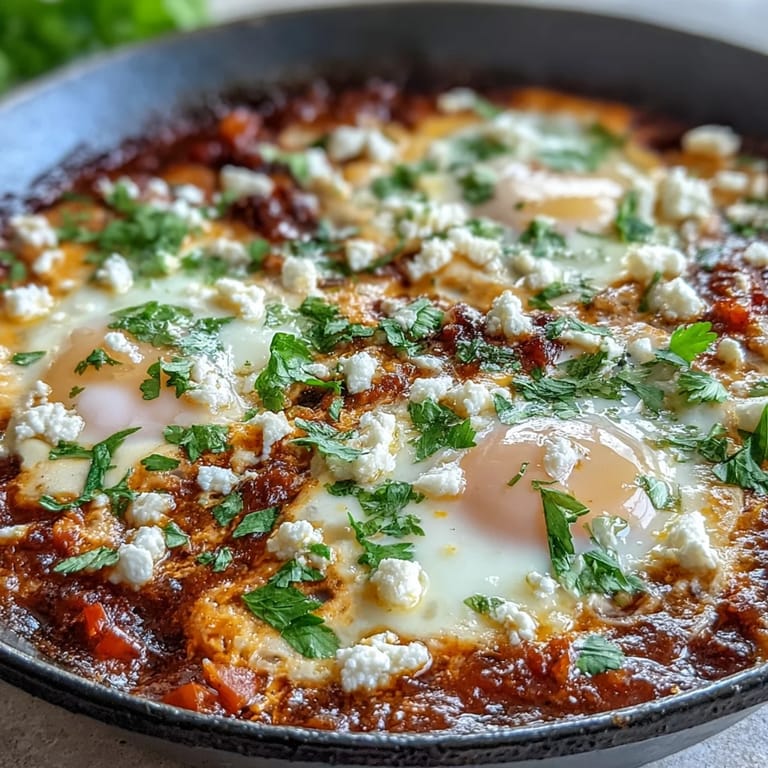
- Carefully crack one egg into each well, keeping the yolk intact. Cover the skillet and let the residual heat and steam do the work for six to eight minutes until the whites set but the yolks stay runny.
- Finish and serve:
- Remove from heat and scatter your cilantro or parsley across the top, add crumbled feta if you're using it, and serve immediately with warm pita bread for dipping into that incredible sauce.
 Save
Save I made this once for my partner when they were having a terrible day, and somehow watching those eggs cook gently in the spiced sauce seemed to change the whole energy of the evening. Food doesn't fix things, but it reminds you that someone cares enough to stand in the kitchen and pay attention.
Timing and Temperature Matter
The first few times I made this, I'd crank the heat to speed things up and end up with onions that weren't quite soft enough and eggs that scrambled around the sauce like stressed swimmers. Once I stopped fighting the process and let medium heat do its thing, everything transformed. The vegetables released their sweetness gradually, the spices bloomed without burning, and the eggs cooked evenly with those perfect runny yolks that justify the whole endeavor.
Why This Works as Breakfast, Lunch, or Dinner
There's a reason this dish appears in cafés across the Middle East at almost any hour—it doesn't apologize for existing at breakfast time or feel out of place at dinner. The protein from the eggs makes it substantial enough to get you through your afternoon, while the spices and sauce feel comforting enough for evening eating. I've learned to stop thinking of it as confined to any particular meal time and just make it whenever the craving hits.
Customizing Without Losing the Soul
The beautiful thing about shakshuka is how it bends to your preferences without becoming something else entirely. I've made vegan versions with chickpeas and tofu for friends with different diets, versions with extra heat for those who love it, and versions where I've added roasted red pepper paste when I couldn't find good fresh peppers. The core idea—eggs in spiced tomato sauce—is flexible enough to accommodate creativity while remaining fundamentally itself.
- Swap the spinach for kale or swiss chard if you want something with more texture and mineral flavor.
- Add roasted red peppers from a jar if fresh ones aren't good quality or you're short on time.
- Keep a batch of the sauce in your freezer, thawed and ready to warm up whenever you want breakfast or dinner solved in fifteen minutes.
 Save
Save This dish taught me that simple food cooked with intention tastes like home, no matter where you're eating it. Make this when you want to impress someone, or make it on a Tuesday just because the spices smell like they're calling your name.
Recipe FAQs
- → What is shakshuka?
Shakshuka is a Middle Eastern and North African dish of eggs poached in a sauce of tomatoes, olive oil, peppers, onion, and garlic. Commonly spiced with cumin, paprika, and cayenne, it's typically served directly from the pan with bread for dipping.
- → How do I know when the eggs are done?
Cook covered for 6–8 minutes until the whites are completely set but the yolks remain runny. You can gently shake the pan to check if the whites are firm. For firmer yolks, cook an additional 2–3 minutes.
- → Can I make this vegan?
Yes, omit the eggs and feta cheese. Add chickpeas, tofu, or plant-based protein alternatives instead. The spiced tomato sauce remains delicious and satisfying on its own with warm pita bread.
- → How spicy is this dish?
The spice level is mild to medium, coming from jalapeño, cayenne, paprika, and cumin. Adjust the heat by reducing or omitting the jalapeño and cayenne for a milder version, or add more for extra warmth.
- → What can I serve with shakshuka?
Warm pita bread is traditional for dipping. You can also serve with crusty bread, rice, couscous, or a side of labneh or Greek yogurt. Fresh herbs like cilantro or parsley add brightness to the final dish.
- → Can I prepare the sauce ahead of time?
The tomato sauce can be made up to 2 days in advance and stored in the refrigerator. Reheat gently before adding the eggs and finishing the dish. This makes it convenient for quick meals.